Let's name the actual problem
Your partner is ready. You're not. They're looking at you with that expectant expression. You're trying to decide if you even want to. This is one of the most common friction points in relationships, and almost nobody talks about it directly. Instead, couples either rush through it (resentment builds) or skip sex entirely (intimacy suffers). There's a third option, and it involves understanding exactly why this gap exists in the first place.
The biology is straightforward. Arousal speed isn't a measure of desire or love. It's largely about nervous system wiring, hormonal baseline, and what's happening in your brain and body at that exact moment. Your partner might be the type who shifts into readiness in five minutes. You might need fifteen or twenty. Neither is better. But mismatched timelines create tension if you don't have a tool to work with.
Why the gap widens as relationships age
Early on, the novelty and dopamine rush can override the timing difference. You're flooded with chemicals that make arousal faster and easier on both sides. Around year three to five, that novelty fades. The gap that was always there suddenly becomes visible. Your partner seems to want sex more often and get ready faster. You're not sure you want it as much. This isn't a sign the relationship is broken. It's normal.
Add in life stress (work, kids, aging parents), and the gap often gets worse. Your nervous system might be in a low-level activated state all day. Your partner's might have an easier off switch. By evening, they're relaxed and interested. You're still processing the day. Resentment sneaks in. So does avoidance.

Photo by FounderTips on Pexels
How a lemon clitoral vibrator actually fixes this
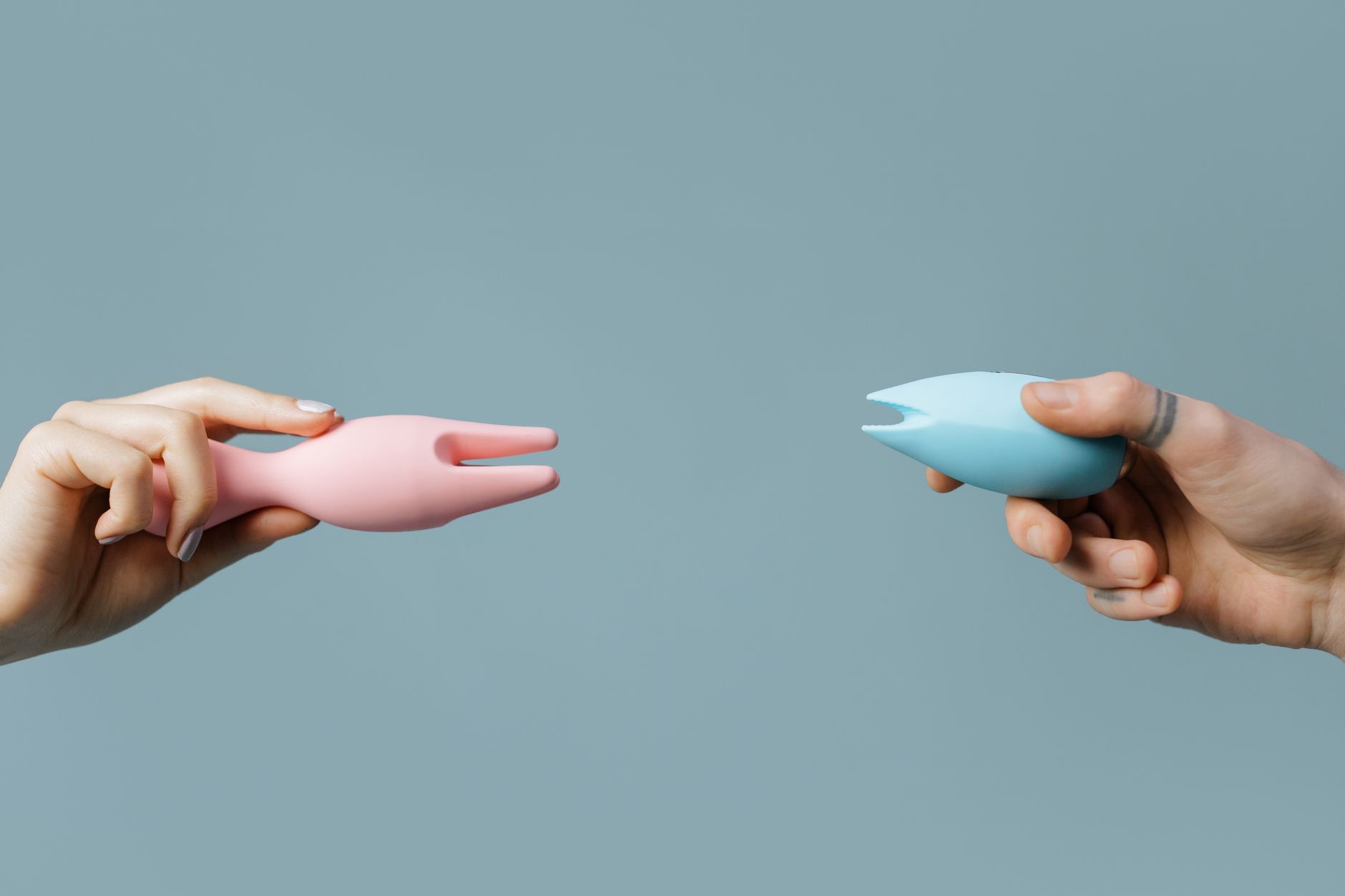
Here's what makes the Lem different from a traditional vibrator. Most vibrators rely on friction and direct pressure. They work best if you're already somewhat aroused. The Lem uses suction stimulation. It sends a pattern of sensation to your clitoris without needing the same warm-up your body normally requires. For people with slower arousal, this is significant. You can get to genuine arousal much faster because you're bypassing some of the initial friction (literally and figuratively).
The magic isn't that it makes you want sex you don't want. It's that it lets your body catch up to your partner's without either of you feeling rushed or dismissed. You're not saying yes to something you don't feel. You're giving your nervous system a tool to transition faster when you do want to.
One practical note: using a lemon vibrator solo for ten minutes before partnered sex changes everything. You're not asking your partner to wait while you warm up. You're doing that prep independently, then coming to the experience already in your body. This reverses the power dynamic that slow arousal can create.
Setting this up with your partner (the conversation)
Most couples never actually discuss this. Instead they perform a choreography of subtle rejection. Your partner initiates. You hesitate. They pull back feeling unwanted. You feel pressured. Everyone feels bad. Then you avoid sex for a week.
Break that cycle by saying something like: "I want us to have sex more often, and I also need more time to get there. Can we try something? I'm going to use my lemon vibrator for ten minutes before we get together. That way I'm not rushing my body, and you're not waiting." That's it. You're not pathologizing yourself. You're not apologizing for your body. You're proposing a solution that works for both of you.
Your partner might feel relieved. They might have been feeling guilty for wanting sex "too much." This reframes it as a compatibility issue with a tool, not a character flaw in either of you.
The actual technique when you're together
When you both are in the room, start with the Lem on pattern one or two. Keep it there longer than you think. Most people jump to higher patterns too fast. The suction sensation works best if you let your body adjust to the rhythm first. Five minutes at pattern two might feel nothing like five minutes at pattern four.
Talk while you do this. Tell your partner what you're feeling. Are you starting to want touch? Does the sensation feel good? Would you like them to touch you elsewhere? This isn't clinical. It's intimate. You're inviting them into the experience rather than performing it privately while they watch.
If your partner wants to be hands-on, great. They can stimulate you with their fingers or mouth while you use the Lem, or they can use it on you directly. The Lem is designed to be shared. If you prefer solo use to warm up, then transition to partnered sex, that's equally valid.
Timing note: most people reach genuine arousal (not just physical readiness, but actual desire to continue) within fifteen to twenty minutes once they're working with the right tool. This is still faster than your baseline, but it's not instant. Don't aim for instant. Aim for "feels good and I want to keep going."
When this isn't just about speed
If the arousal gap is really a desire gap, a lemon vibrator helps with that too, but differently. If you genuinely don't want sex very often, that's separate from the timing issue. That might be about stress, depression, hormonal changes, relationship satisfaction, or past sexual experience. A clitoral vibrator can help you reconnect with your own pleasure, which sometimes reconnects you with desire. But it's not a magic fix for desire mismatch.
The distinction matters. "I want sex but need more time" is different from "I don't want sex as often as my partner does." Both are real. Both deserve attention. The Lem helps with the first scenario significantly. For the second, you might need a deeper conversation about frequency and what works for each of you.
The research behind why this works
Studies on arousal discrepancy in couples consistently show that mismatched timing causes more strain than mismatched desire frequency. When one partner feels rushed, they shut down. When the other feels rejected, they distance. The gap widens. Using a tool that speeds up arousal without pressure actually reduces conflict more than you'd expect. It's not romance, but it works.
Women's arousal in particular tends to be contextual and slower. That's not a flaw. But in relationships where your partner's arousal is context-independent and faster, that difference becomes friction. A lemon clitoral vibrator acknowledges your body's actual timeline while giving you agency over it.
The shift this creates over time
After a few months of using this approach, couples report something interesting. The arousal gap doesn't shrink, but the resentment around it does. Sex becomes something you both choose into rather than something that happens to you. Your partner stops feeling like they want it more. They just feel like you both want it on your actual timelines, using the tools that work.
Some people find they want sex more often when it doesn't feel rushed. Some don't. Both are fine. The point is you're working with biology, not against it.
Questions people actually ask
Can using a lemon vibrator solo replace partnered sex?
No. Solo use and partnered sex access different parts of the experience. One's about your body's pleasure and arousal. The other's about intimacy and connection. They're complementary, not interchangeable. Solo use with the Lem is a tool to get your body ready so partnered sex feels better, not so you skip it.
Will my partner feel like I'm not attracted to them if I need more time?
Not if you frame it right. Needing time to warm up isn't about them. It's about your nervous system. Your partner probably knows this already, even if you don't. Make it explicit: "I love you and I want this. My body just takes longer to realize it."
What if my partner wants me to use the lemon vibrator during sex but I find that distracting?
Then don't. Use it beforehand, or use it solo and come to partnered sex already warmed up. Communication matters more than the specific approach. If your partner needs you to use a toy during, that's a different conversation about what they want from the experience.
Is it normal for arousal to take this long?
Completely. Women's arousal can take fifteen to twenty minutes. Some people take even longer. That's not dysfunction. It's just how their nervous system is wired. The only issue is if it's creating conflict in the relationship, which a lemon clitoral vibrator helps solve.
Can arousal speed change over the years?
Yes. Hormonal changes, stress, depression, medication, and relationship satisfaction all shift how fast you warm up. If you've noticed your arousal taking longer than it used to, that's worth mentioning to your doctor. But slower arousal isn't automatically bad. It often just means your body needs different input.
If we use a lemon vibrator, am I admitting there's something wrong with my sexuality?
No. You're using a tool designed to help your body and mind sync up. Your sexuality is fine. Your timeline is fine. Adding a tool is just practical problem-solving, the same way couples use lube or try different positions. It's about fit, not about fixing broken parts.
The thing nobody tells you
Most relationship tension about sex isn't about sex. It's about feeling seen and wanted. When your partner initiates and you hesitate, they feel rejected. When you feel rushed, you feel pressured. Using a lemon clitoral vibrator solves neither of those feelings directly. But it creates space for the real conversation: "I love you. I want this. I'm just on a different timeline." That conversation changes everything.
Your body's arousal speed is not a character flaw. Your partner's faster arousal is not neediness. You're just different. A tool that lets you both meet in the middle isn't cheating. It's using what's available to build a sex life that works for both of you, not just whoever gets ready first.
For more on bridging intimacy gaps, explore how lemon vibrators rebuild pleasure when intimacy feels disconnected from desire. And if the arousal gap is part of a bigger communication issue, using a lemon vibrator after communication breaks down might help restart the conversation.