Here's the tension nobody names
You're with your partner. Things are heating up. But then you feel the shift. They're ready. They want this to be quick. And suddenly your body is doing the math it shouldn't have to do. You start calculating whether you can get there in time. You rush your own pleasure to match their timeline. And then nothing happens, because your body knows it's being squeezed.
This is not a communication problem alone. It's a mismatch between two different nervous systems, and it's wildly common.
Why your timeline matters more than you think
Your partner wanting efficient sex isn't wrong. They have a body. They have needs. But your need to not perform is equally valid. The problem isn't that they want what they want. The problem is the silent pressure you absorb, the way you start treating your orgasm like a task to complete rather than a sensation to inhabit.
Studies on sexual satisfaction show that when people (especially those with vulvas) feel rushed, they're significantly less likely to orgasm. Not because they're broken. Because anxiety and arousal are neurologically opposed. Your sympathetic nervous system kicks in (that's the fight-or-flight mode) and your parasympathetic nervous system, the one that actually allows pleasure, shuts down.
Using a tool like a lem vibrator isn't about compensating for your partner's pace. It's about giving yourself permission to stay in your own body.
What changes when you bring a vibrator into a rushed scenario
A lemon clitoral vibrator works in a timeline that's separate from intercourse. That's the key insight.
When you're using one, you're not waiting for your partner to catch up. You're not tracking their arousal as a checkpoint for your own. The vibrator becomes your anchor to your nervous system. It's delivering consistent stimulation that doesn't depend on anyone else's tempo.
Here's what typically happens:
Your partner initiates. You bring out the lem. You position it, turn it on at a low pattern (usually 1 or 2), and you stay with yourself. Your partner might penetrate while you're using it, or you might focus solo stimulation first. Either way, the vibrator's job is to keep your nervous system parasympathetic. You're not holding tension. You're not performing. You're receiving input.
The practical setup that actually works
Timing matters here. Start with the lemon clitoral vibrator before things get intense, not after your partner is already in motion.
If your partner wants to move quickly, say something like: "I want to come with you, but I need the vibrator to get there. Start me off?" This frames it as collaborative, not rejecting.
Position yourself so the lem is doing most of the work. You shouldn't be straining or concentrating hard. The whole point is to reduce cognitive load, not increase it.
If your partner is inside you, you can angle the vibrator against your clitoris while staying in contact with them. If you're both clothed or it's more exploratory, use it directly. The lem's suction mechanism means you don't need the kind of direct pressure that requires active participation from your pelvic floor. It does the work for you.
Set a pattern and stay with it. Don't keep changing speeds. Your body needs consistency to build arousal. A lower pattern (1-3) usually gives you that consistency without overstimulation.
What to do when your partner is still rushing
Honestly? Keep using the vibrator anyway.
I know that sounds blunt, but here's why. If you abandon your own pleasure to match their pace, you're teaching both of you that your body is a convenience rather than a full participant. That's a pattern that gets harder to break.
If your partner finishes before you do, you have options. You can keep going solo. You can ask them to stay present with you, even if they're not actively moving. You can take a break and reconnect later.
The key is not reverting back to the frame where your timeline is the problem. It isn't. How to use a lemon vibrator when your partner initiates but you're not physically ready yet covers that boundary-setting in more depth, but the same principle applies here. Your body gets to take the time it needs.
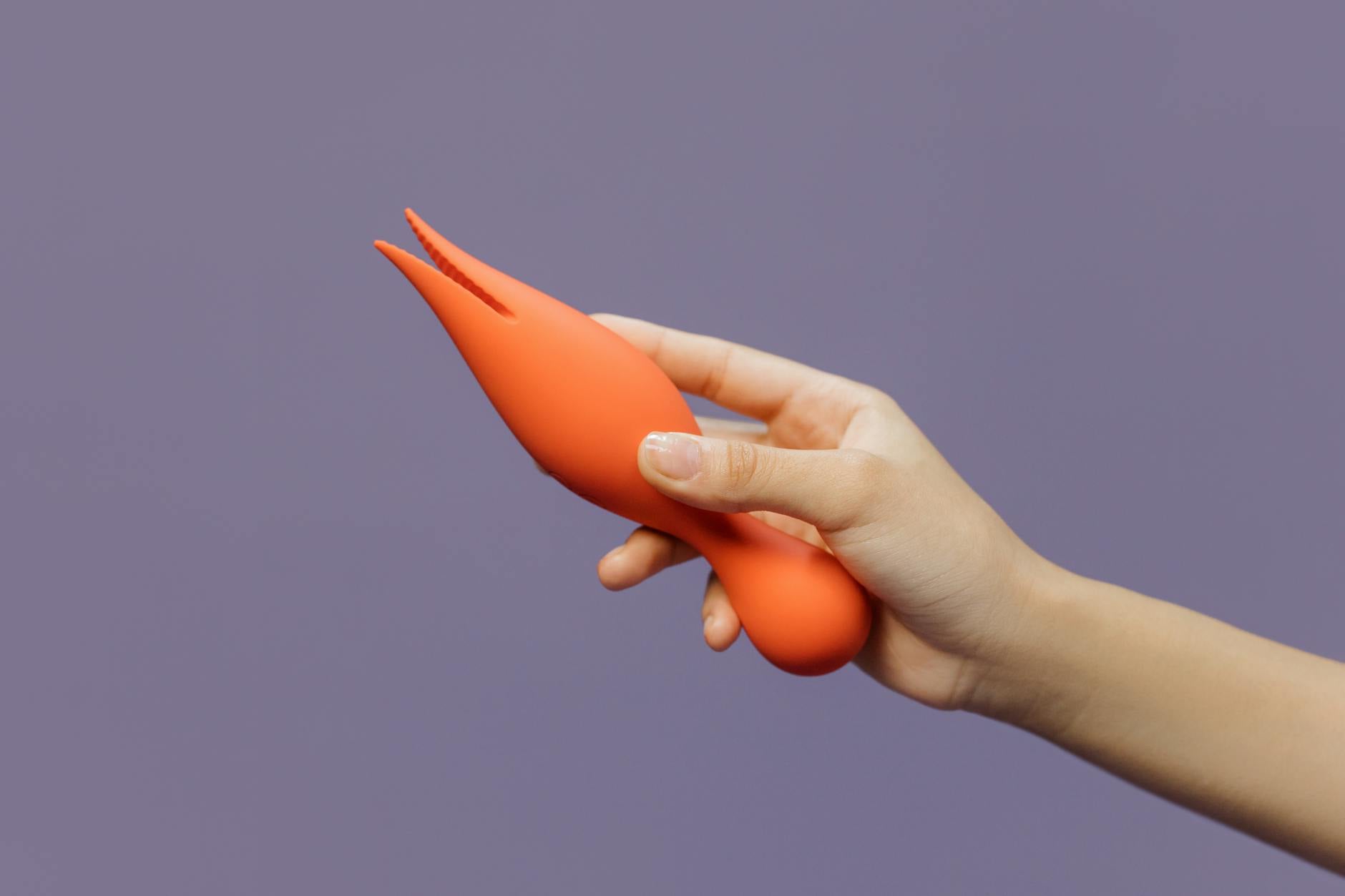
Photo by cottonbro studio on Pexels
The conversation you need to have afterward
Using a lem vibrator during sex is not a conversation ender. It's often a conversation starter.
After sex, when you're both calm, this is the moment to talk about timing. Not during, not with resentment, but with clarity. "I noticed I was rushing tonight. I need a bit more time to get there, and that's not going to change if I'm watching the clock. Can we slow down?"
Some partners will immediately adjust. Others will feel defensive, like you're criticizing their sexuality. That defensiveness is usually about them not understanding that slower is not less. You're not rejecting their speed. You're protecting your nervous system.
If your partner consistently resists giving you space for your own pleasure, that's bigger than vibrators or timing. That's a boundary issue. How to rebuild desire when physical attraction shifts after years together goes into this deeper, but the short version is: your pleasure mattering is non-negotiable.
Why the lem specifically helps with this dynamic
The lemon clitoral vibrator's suction technology is gentler than traditional vibration on its lowest settings. That means you can stay with it for longer without losing sensation or feeling overstimulated. You're not white-knuckling through anything.
It's also independent of your partner's rhythm. If they speed up, the lem stays consistent. If they slow down, the lem doesn't change. That consistency is what allows your nervous system to actually relax and build pleasure instead of bracing for the next shift.
When this is about more than timing
If your partner is consistently rushing and also dismissing your need for longer buildup, that's a pattern worth examining. Some people rush because they're anxious about performance. Some rush because they don't really care whether you finish. Some rush out of habit.
The why matters, but the fix is the same: you get to decide how fast or slow your pleasure goes. A tool like a lem vibrator gives you back that agency. It says to your body and to your partner: "I'm here. I'm present. And I'm not going anywhere until I'm ready."
FAQ
Can I use a lem vibrator during intercourse?
Yes. Position it against your clitoris while your partner is inside you. The angle might take a minute to find, but once you do, it works. The suction doesn't interfere with penetration the way some vibrators do. You might need to adjust pressure or angle based on what feels right, but it's definitely doable.
What if my partner thinks using a vibrator means they're not enough?
That's their insecurity talking, not a reflection of reality. A vibrator is a tool for pleasure, not a referendum on your partner's abilities. You might need to have a direct conversation about that. "This helps me finish. Your pleasure and this tool can coexist." If they can't get there, that's something to explore together, possibly with a couples therapist. How to use a lemon vibrator when your partner thinks toys mean they're not enough dives deeper into that specific dynamic.
How do I bring this up without making it weird?
Practical and direct works better than shy. "I want to try something that might help me get there faster. Can we try this together?" Framed that way, you're not rejecting them. You're inviting them into a solution. Most partners respond well to that.
What if I still don't finish even with the vibrator?
Sometimes the issue isn't mechanics. Sometimes it's stress, medication, hormones, or just not being in the mood. A vibrator is a tool, not a guarantee. If you're consistently not finishing and it bothers you, that's worth exploring with a healthcare provider. But if it only happens when your partner is rushing? That's the pressure speaking, not your body failing.
Should I use the lem on its highest setting to finish faster?
Actually, no. Your nervous system needs time to build arousal, and jumping straight to high intensity can oversensitize you or trigger tensioning rather than release. Start low (pattern 1 or 2) and increase only if you want to. Many people finish with the same pattern they started with. Let your body guide you.
What if my partner wants to finish before I even get started?
Then you have a deeper conversation to have, not a vibrator problem to solve. You're entitled to foreplay. You're entitled to your own arousal time. If your partner won't give you that, a tool can't fix what's actually a respect issue.
The bottom line
Your pleasure doesn't operate on someone else's clock. Bringing a lem vibrator into moments when your partner is rushing is one way to reclaim that timeline. But the real work is believing that your body's pace is valid, even when it's different from theirs. The vibrator just makes that belief easier to hold.