
Here's the thing nobody tells you about talking about sex
Most couples believe they need to master conversation before they master touch. They think the roadmap goes: talk openly, build understanding, then experience pleasure together. But in my twenty-five years as a relationship therapist, I've watched the opposite happen just as often. Sometimes the conversation gets easier after the touch.
When communication barriers are high, shame is higher. And shame makes words stick in your throat.
Why shame kills the conversation
Let's say your partner hasn't initiated sex in months. Or you want to ask for something specific, but the thought of naming it out loud creates this tight, suffocating feeling in your chest. Or you've been avoiding the whole topic because previous attempts to talk went sideways. Each of those scenarios carries the same undercurrent: the belief that wanting pleasure, or naming desire, or asking for something different is somehow wrong or risky or will upset your partner.
Shame silences people. It's not a personality flaw or a lack of love. It's a protective mechanism that says, "If I stay quiet, I can't be rejected." The problem is that staying quiet creates the very distance you're afraid of.
What I've noticed with couples who bring clitoral vibrators like the Lem into their intimate life is that the vibrator becomes a permission slip. It's a third object in the room that says, "This is okay. This is welcome. This is about pleasure, and pleasure is allowed here." That small permission often creates enough psychological space for words to follow.
The neuroscience behind touch before talk
Your brain processes physical sensation faster than language. When you experience pleasure, your nervous system downregulates. Cortisol (your stress hormone) drops. Oxytocin (your bonding hormone) rises. Your prefrontal cortex, the part that handles shame and self-criticism, quiets down.
In that more relaxed state, conversation becomes less threatening. You're not activating the same defensive pathways. You're not bracing for rejection or judgment because your body is already in a state of acceptance.
I'm not saying that pleasure solves all communication problems. I'm saying that pleasure creates a neurological foundation where difficult conversation becomes possible instead of impossible.
What actually happens when you introduce a lemon vibrator
The best part about adult toys like clitoral vibrators is that they remove the performance pressure that often silences people. A partner doesn't have to "do it right" or worry if they're touching the right spot or moving at the right pace. The vibrator handles the mechanical part. Your partner gets to focus on presence, on intimacy, on learning what you respond to.
This takes the pressure off both people. The receiving partner gets to experience pleasure without the guilt that often comes with "asking too much." The giving partner gets to participate in pleasure without the anxiety of proving something.
That shift in energy matters. I've had couples tell me that using a lemon clitoral vibrator together was the first time in years they both felt like they were on the same team instead of in competition.
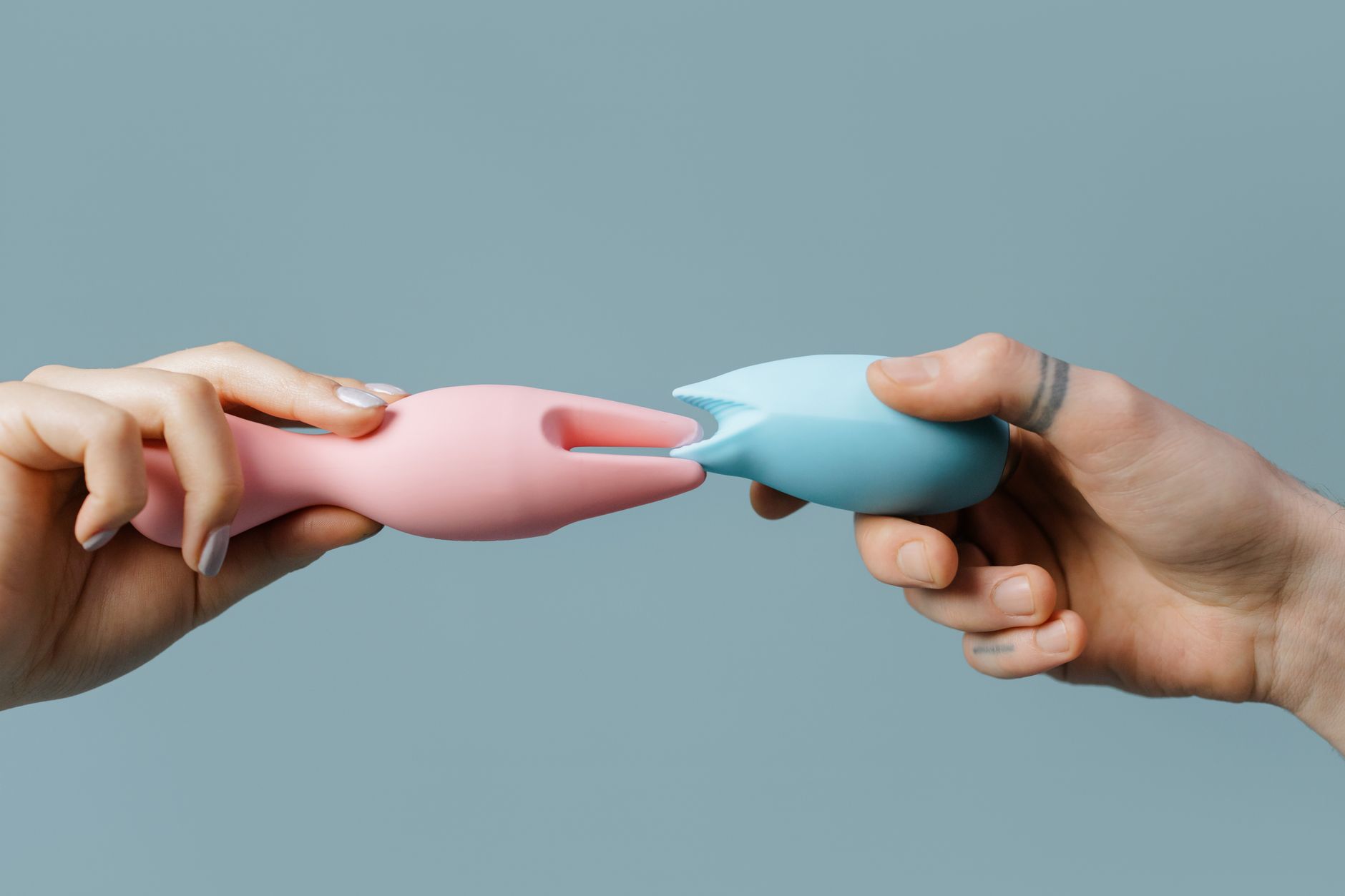
Photo by cottonbro studio on Pexels
How to use this as a reconnection tool, not a band-Aid
The vibrator itself isn't the healing. The healing comes from what happens around it. So here's how to approach this intentionally.
Start with curiosity instead of performance. Before you even bring it into the bedroom, you might say something like, "I've been thinking about trying something together. I'm curious what you think." That's not a demand. It's an invitation. It gives your partner space to have feelings about it, and it gives you both permission to be nervous.
Second, agree beforehand that this isn't about whether the vibrator "works" in terms of orgasm. It's about reconnection. Some of my clients orgasm the first time they use a lemon vibrator together. Others don't, and that's completely fine. The point is that you're creating a new context for intimacy. You're saying, "Our old pattern wasn't working, so we're building something new."
Third, and this is important. Build actual conversation time around it. Not during sex, but after. Maybe you're lying in bed, maybe you're having tea the next morning. But at some point, you name what happened. "That felt different to me." "I liked that you were more relaxed." "I wasn't sure if you'd want to do that again." These are the micro-conversations that rebuild trust.
When shame is really old, start here
If you've spent decades believing that your body is a problem, or that wanting pleasure is selfish, or that a "good partner" never asks for anything, then one night with a clitoral vibrator won't undo that. But it can crack the door open. And once the door is cracked, you can actually work with that.
I often recommend that people explore solo first. Use a lemon vibrator on your own for a few weeks. Get familiar with what feels good. Notice how your body responds without the pressure of someone watching you or waiting for you. That self-knowledge is the foundation for everything else.
When you know your own pleasure, you're not starting from zero in a partnered context. You already know what you like. Now you're inviting your partner into that knowledge. That's a completely different conversation.
The conversation usually comes later
I've had clients who used a lemon sexual toy regularly for two months before they actually talked about desire with their partner. But by then, the framework had shifted. Their body had experienced pleasure in a supported, safe way. Their nervous system knew it was allowed. And then one day, conversation became possible.
This doesn't happen in a straight line. You might use a vibrator together and then avoid talking about it for weeks. That's okay. There's no deadline.
What matters is that you're building a new template. You're teaching your nervous system that pleasure is safe, that your body is allowed, that your partner isn't going to shame you. And from that new template, everything gets easier. Conversation, vulnerability, asking for what you want, saying no when you need to.
When communication barriers are high, lemon clitoral vibrators offer a way to start somewhere else. Not with words, but with touch. With permission. With a small, concrete object that says, "We're doing this differently now."
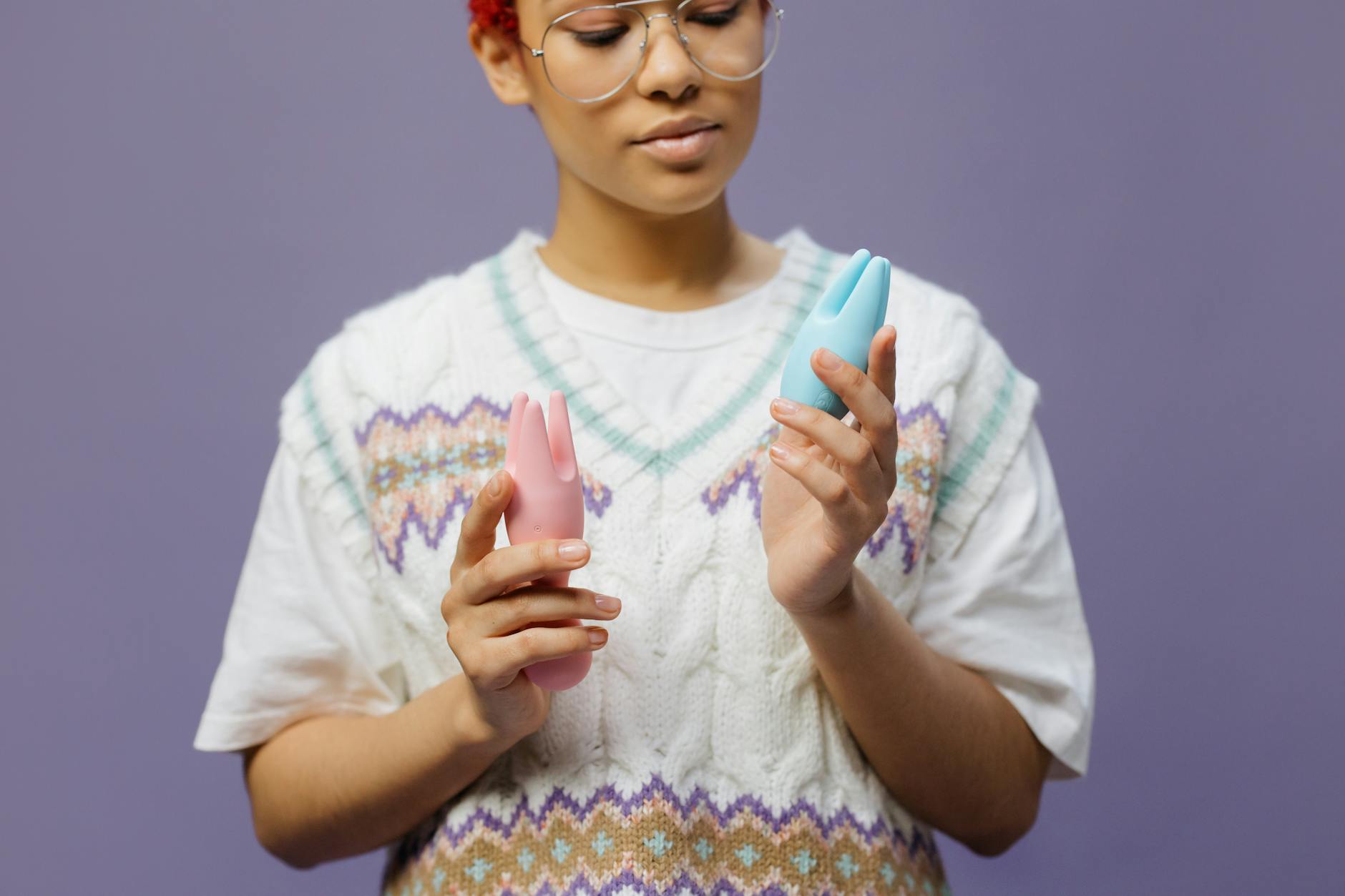
Photo by cottonbro studio on Pexels
How to actually start the conversation
If you're stuck on where to even begin, here are three sentence starters that work.
"I've been thinking about us lately, and I want to try something together. No pressure if you're not interested, but I'd like to see if this helps us reconnect." This frames it as collaborative and low-stakes.
"I found something I think could be fun for both of us. I'm a little nervous about asking, but I trust you." This invites vulnerability while also signaling that you're nervous, which often makes partners more receptive.
"I know we haven't talked much about sex lately, and I miss feeling close to you. I thought maybe we could try something together." This names the disconnect directly and connects the vibrator to what you actually want: closeness.
Pick whichever feels most true to you. The exact wording matters less than the core message: you want to reconnect, you're inviting your partner, you're offering a specific tool.
FAQ
Will using a vibrator make my partner feel inadequate?
Only if you frame it that way. Most partners actually feel relief when a vibrator enters the picture because it removes the pressure to be everything. I recommend being explicit about this. "I'm not asking you to do this instead of me. I want us to explore together" makes a huge difference.
How do I know if my partner will be into this?
You don't. That's why you ask. Some people are immediately excited. Some need time to adjust to the idea. Some say no, and that's their boundary to set. But you won't know unless you ask in a way that feels safe and curious.
What if my partner says no?
That's information. It doesn't mean the relationship is broken or that they don't love you. It might mean they need more conversation first. It might mean they have their own shame to work through. It might mean they're just not interested in vibrators specifically. All of those are valid. From there, you can ask what would feel better to them. Does talking with a couples therapist sound helpful? Do they want to explore their own boundaries first?
Is there a "right" way to use a lemon vibrator together?
No. Some couples use it solo while their partner watches. Some use it together. Some take turns. Some use it as foreplay, some as the main event. The only "right" way is the way that feels good and consensual to both of you.
What if we try this and the conversation still doesn't happen?
Then you might need more support. A couples therapist can help you build communication skills in a structured way. That's not a failure. That's actually how deeper healing happens sometimes. The vibrator opens one door. Therapy might open another.
How long before we'll actually feel reconnected?
That varies wildly. Some couples feel the shift after one experience. Some need weeks or months of consistent intimacy building before they feel fundamentally reconnected. Patience matters here. You're not fixing something overnight. You're rebuilding trust and safety, and that takes time.
The thing about touch before words
Language is powerful, but it's also complicated by shame, defense mechanisms, and old patterns. Touch is simpler. Your body knows what feels good. Your nervous system knows what feels safe. When you use a tool like a lemon vibrator intentionally, you're giving your body permission to experience pleasure before your brain has to justify it or defend it.
Conversation usually follows. But even if it takes time, you're still building something. You're still saying to your partner, "I want us. I want this differently. I'm showing up." And sometimes that nonverbal message is exactly what needs to happen first.
If communication barriers are high in your relationship and you're not sure where to start, reconnection through touch and play might be exactly the door you need to open. From there, words get easier. Trust rebuilds. And you might discover that your partner was waiting for permission too.