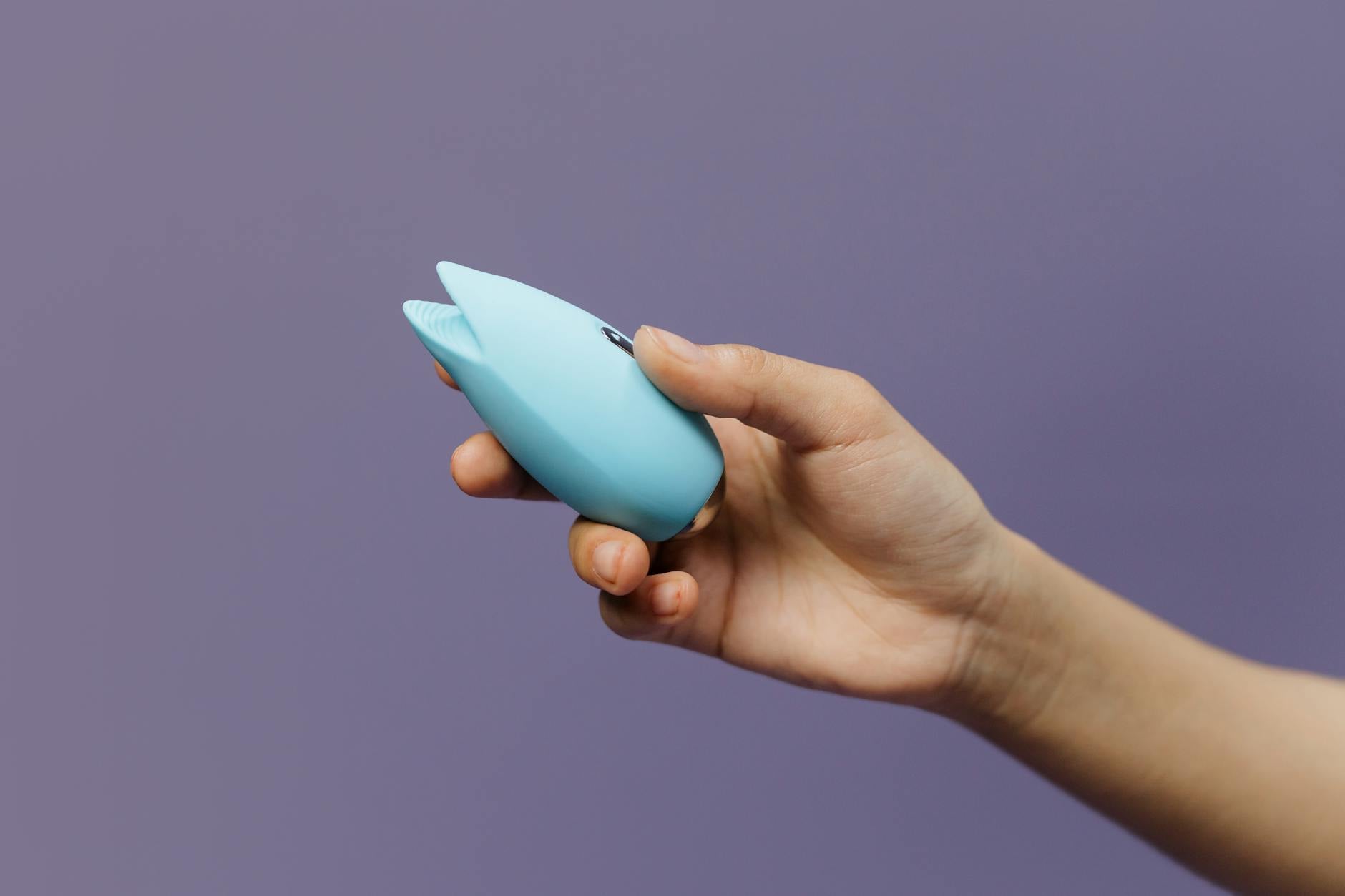
Why Lemon Vibrators Deliver Better Orgasms on Sensitive Tissue
Let's start with the friction problem.
Most vibrators buzz. They vibrate against your skin at speeds between 5,000 and 10,000 Hz, which creates constant friction. For people with thick, resilient tissue, that feels amazing. For people with thinner or more sensitive vulvae, it can feel sharp, overstimulating, or even painful.
Lemon vibrators, specifically air-suction clitoral vibrators like the Lem, work on a completely different mechanism. Instead of vibration, they use gentle suction and pulsing air waves. No friction. No relentless buzzing. Just stimulation that feels more like a mouth than a machine.
This changes everything for sensitive tissue.
How air-suction lemon vibrators actually work
When you position an air-suction toy like the Lem against your clitoris, it creates a gentle seal. The toy then releases rhythmic pulses of air that stimulate the nerve endings in and around your clitoral head. It's less about pressure and more about a sensation that some people describe as "stroking" or "kissing."
The clitoris has roughly 8,000 nerve endings concentrated in a relatively small area. Traditional vibrators activate all of them at once, all the time. Air-suction toys create a wave pattern that builds and releases, which feels more natural and often more intense to sensitive tissue because it's not working against mechanical friction.
What this means in practice: you can use an air-suction toy longer without numbness or irritation. You can layer it with touch from a partner. You can explore sensation without your tissue working overtime.
The sensitivity problem with traditional vibrators
If you have sensitive tissue, here's what probably happened the last time you tried a traditional vibrator.
You turned it on. For about two minutes, it felt okay. Then either (a) it started to feel numb, (b) it started to feel raw, or (c) you couldn't quite get there because the buzzing felt like noise instead of pleasure.
This isn't a you problem. It's a friction problem.
Tissue sensitivity comes from a few sources. Hormonal changes, especially lower estrogen, thin the tissue and reduce natural lubrication. Age, medications, or pelvic floor tension can amplify sensitivity. Sometimes people are just born with more reactive tissue, and that's completely normal.
With friction-based vibrators, your tissue is working against the toy. The more sensitive your tissue, the more you notice the mechanical pressure and speed. Air-suction toys flip this: instead of friction, you're working with your tissue's natural nerve response.
Why the Lem and similar lemon clitoral vibrators feel different
The Lem is an air-suction toy designed specifically for sensitive use. It has seven different intensity levels, which means you're not locked into a one-size-fits-all buzz pattern.
Start at level one or two. For sensitive tissue, this is key. You can gradually increase intensity, or stay low. There's no pressure to go harder because "harder" isn't the point.
The Lem's rounded head creates a complete seal without pinching, which means the suction sensation is even and comfortable. You're not fighting weird angles or pressure points. It just works.
Many people with sensitive tissue report that they orgasm faster with air-suction toys than they ever did with traditional vibrators. Not because the toy is stronger, but because it doesn't come with the friction tax. Your nervous system isn't struggling against the mechanism. It's just responding.
Lubrication matters, but differently
With traditional vibrators, lubrication is often a bandage for a friction problem you shouldn't have to manage in the first place.
With lemon sucker toys, lubrication is optional, not essential. The air-suction mechanism doesn't depend on your natural lubrication to feel good. That said, a tiny bit of water-based lube can reduce any micro-suction that feels uncomfortable, and it can help the toy glide if you're moving it around.
The key difference: you're not using lube to solve a vibrator problem. You're using it to fine-tune an already-good sensation.
This matters if you have vulvovaginal atrophy (thinned tissue from low estrogen), post-menopausal dryness, or medication-related dryness. You can have great orgasms without treating dryness as a problem to fix. The toy works with your body as it is.
The pelvic floor connection
Sensitive tissue often comes with pelvic floor tension. Your muscles tighten to protect sensitive tissue, which makes everything feel tighter, more tense, and sometimes painful.
There's also a pleasure connection here. When you're not fighting mechanical friction, your pelvic floor can actually relax and participate in the orgasm. Tension holds you back from deeper sensation.
Because air-suction toys don't require your pelvic floor to brace against friction, they allow your muscles to stay relaxed. You get stronger, more localized orgasms instead of whole-body tension.
This is one reason people with sensitive tissue report that air-suction toys feel more satisfying than they expected. The pleasure isn't just physical. It's the relief of not having to manage pain or discomfort while you're trying to feel good.
Intensity without harshness
Here's a counterintuitive thing about lemon vibrators and sensitivity: many people find that air-suction toys feel more intense than traditional vibrators, even at lower settings.
This is because intensity and friction are different things. A traditional vibrator might buzz at 7,000 Hz, but the friction caps how much sensation you actually feel. An air-suction toy at level three might feel more intense because it's activating nerves directly without any friction interference.
This means you have real control. You're not choosing between "numb" and "ouch." You're choosing between "subtle," "strong," and "deep."
For sensitive tissue, this is the whole game. Control, precision, and sensation that works with your body instead of against it.
Common questions about air-suction toys and sensitive tissue
Can I hurt myself with an air-suction toy? No more than any toy, but the mechanism is safer for sensitive tissue. Because there's no aggressive vibration, there's less risk of irritation. That said, if something feels uncomfortable, stop. You shouldn't be in pain.
Do I need a prescription or special tissue prep to use a lemon clitoral vibrator? No. If you have diagnosed genitourinary syndrome of menopause (GSM) or severe atrophy, a topical estrogen cream or moisturizer can help, but air-suction toys work fine without medical prep.
How long does it take to orgasm with an air-suction toy? Everyone is different. For sensitive tissue, many people report faster, more reliable orgasms than with other methods. But if it takes longer, that's also fine. There's no clock.
Can I use an air-suction toy if I have pain during sex? Air-suction toys don't penetrate, so they avoid the main source of pain for most people with dyspareunia. That said, if you have pain, talk to your doctor. Pain is information, not normal.
Why lemon sexual toys matter for sensitive tissue
The clitoral vibrator market is huge, and most products are designed for people with average tissue sensitivity. If you're on the sensitive end of the spectrum, that can feel like the entire category of toys is off-limits.
Lemon vibrators, and specifically air-suction designs, changed that conversation. They're designed for a different body response. The science backs it up.
When you find a toy that works with your tissue instead of against it, pleasure becomes accessible instead of a project. You stop managing pain and start actually feeling sensation.
That's the whole point. Your body deserves a tool that fits.
What to try if you're new to air-suction toys
If you have sensitive tissue and you've never tried an air-suction toy, here's how to start.
Begin with the lowest setting. Seriously. You're not trying to prove anything. Level one is the entry point. Use a tiny bit of lube if you want, or skip it. Position the toy against your clitoris and see how it feels.
If it feels good, stay there. If it feels like you need more, move to level two. You're looking for the intensity that makes you want to keep going, not the intensity that feels like it "should" work.
Take time. Arousal takes longer for some people, especially if you have sensitive tissue. Budget 10-20 minutes. Your nervous system will tell you what it needs.
If you're partnered, you can use it together. Some people find that having a partner watch, or having a partner inside them while they use the toy externally, changes the sensation completely.
The goal isn't performance. It's discovery. You're learning how your sensitive tissue actually responds when the friction is gone.
The bigger picture
Sensitive tissue is often treated like a problem. It's not. It's just a different nervous system, and it needs a different tool.
When you find that tool, everything shifts. Pleasure stops being something you're chasing and starts being something you're experiencing.
That's what air-suction lemon clitoral vibrators do for sensitive tissue. They make pleasure simple.
If you're curious about how lemon vibrators compare to other options, read more about how they stack up against traditional clitoral vibrators. And if you're wondering whether they're right for your body, learn more about how they work for you specifically.
FAQ
Do lemon vibrators work if you have no sensation?
If you have numbness or severely reduced sensation, air-suction toys might actually feel more noticeable than traditional vibrators because they don't rely on friction to register. That said, numbness is sometimes a sign of a larger issue. If you've lost sensation over time, it's worth checking in with a doctor. Diabetes, nerve damage, and some medications can cause numbness, and that's worth addressing.
Can I use a lemon sucker toy during my period?
Absolutely. Some people find that their sensitivity changes during different parts of their cycle, so you might prefer lower or higher settings depending on the week. But there's no medical reason you can't use an air-suction toy during your period. Just make sure your toy is clean before use.
Are lemon vibrators quieter than regular vibrators?
Yes. Air-suction toys make a subtle whooshing sound, not a loud buzz. This matters if you're concerned about noise, live with roommates, or just prefer a quieter experience.
How do I know if I actually have sensitive tissue or if my previous vibrators were just wrong?
Honest answer: you probably won't know until you try a toy designed for sensitive tissue. That's the only way to know if the problem was your body or the wrong tool. Many people assume they're "not vibrator people" after bad experiences with friction-based toys. Then they try an air-suction toy and everything changes.
Can I use lemon clitoral vibrators with a partner?
Yes. Some people use air-suction toys during partnered sex as external stimulation, or during foreplay. Some people use them solo. The toy works either way. If you're using it with a partner, communication is key. Tell them what feels good, what you want to try, and what to avoid.
What if an air-suction toy doesn't feel intense enough?
Most air-suction toys have multiple intensity levels. Start low and work up. If you max out the intensity and it still feels gentle, that might mean your tissue isn't as sensitive as you thought, or you might just prefer a stronger sensation. Nothing wrong with either. Some people add a traditional vibrator later, or layer sensations. Your pleasure is the only measure that matters.