Here's the thing about vaginismus
Vaginismus is your pelvic floor doing its job too well. The muscles tighten involuntarily in response to penetration (or sometimes just the anticipation of it), making sex painful or impossible. It's not psychological weakness. It's not a sign you don't want your partner. It's a physiological response, often rooted in past trauma, anxiety, medical experiences, or sometimes nothing obvious at all.
The frustrating part: most people assume pleasure stops when penetration hurts. It doesn't. You've just been looking in the wrong place.
Why lemon vibrators bypass the problem entirely
Here's what makes air-suction clitoral vibrators different from traditional vibrators and penetrative sex. The Lem and similar devices stimulate your clitoris through suction and pulsation. They don't enter your body. They don't require your pelvic floor to relax. They work entirely outside the area that's tight, painful, or triggered.
This matters because your clitoris has around 8,000 nerve endings concentrated in a space smaller than a pea. You don't need penetration to access them. You don't need your pelvic floor to cooperate. You just need the right kind of stimulation, applied the right way.
Many people with vaginismus report that a clitoral suction vibrator is the first device that's given them reliable pleasure without pain. Not because the toy is magic, but because it sidesteps the whole mechanism that's been locked down.
The vaginismus and arousal cycle connection
Vaginismus often creates a secondary problem: anticipatory anxiety. You start to brace before anything sexual happens, which makes arousal harder to reach, which makes the muscles tighter, which makes sex more painful. It's a feedback loop.
Using a lemon vibrator solo breaks that loop because there's zero penetration risk. Your nervous system doesn't need to mount a defense. Over time, positive experiences with pleasure rebuild your sense of safety around sexuality. That shift in your nervous system is what eventually makes partnered sex, therapy, and other forms of connection feel more possible.
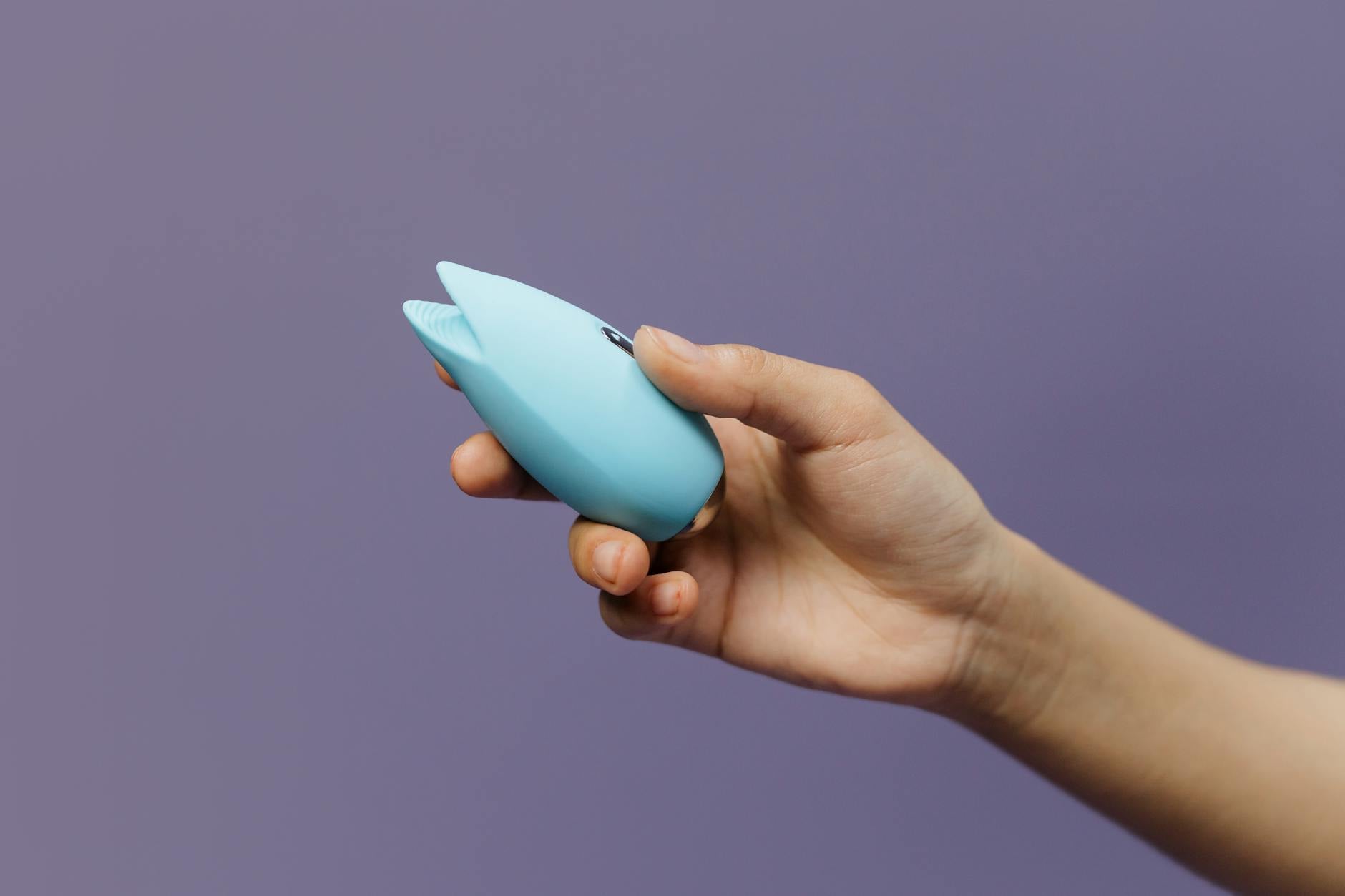
Photo by cottonbro studio on Pexels
How to use a lemon suction vibrator safely with vaginismus
Start outside your body entirely. Not because you're broken, but because your nervous system needs to learn that this is safe. Hold the device over your underwear first. Feel the sensation through fabric. Let your brain clock it as "this does not hurt, this does not penetrate."
When you're ready, move to direct contact. Low settings only. Patterns 1 and 2 on the Lem are gentle enough that they feel more like a whisper than a demand. The suction action mimics how a partner might use their mouth, but without the pressure or unpredictability of another person.
Don't rush to the high-intensity settings. Vaginismus isn't about needing more stimulation. It's about safety. Your pelvic floor will relax when it believes you're safe. That belief builds gradually, through repeated experiences that confirm: no pain, no pressure, no threat.
Set a timer for 10 minutes max your first few sessions. Stopping before you're tired keeps the experience positive and prevents overstimulation, which can feel like a violation to someone with pelvic tension.
The conversation with your partner (if you have one)
Let's be honest. Using a clitoral vibrator when you have vaginismus sometimes triggers a partner's insecurity. They might interpret it as a rejection of them, or assume you're replacing them. That's their work to do, not yours. But the conversation matters.
Frame it correctly: "My pelvic floor is in pain during penetrative sex. I'm using this device to access pleasure safely while I work on that. This is helping me rebuild my relationship with my own body." Those two things can coexist. Penetrative sex with them, and pleasure with the Lem solo. Neither negates the other.
If you want to involve your partner, that's a separate conversation with different boundaries. A lemon clitoral vibrator can absolutely be part of partnered play, but only once you're comfortable using it alone and your pelvic floor has learned a pattern of pleasure without pain.
When pelvic floor physical therapy becomes essential
Here's what I tell clients: a vibrator is a tool for pleasure, not a treatment for vaginismus. If penetration is painful, or if your pelvic floor is chronically tight, you need a pelvic floor physical therapist. They can assess whether your tension is behavioral (learned guardedness that relaxation can fix) or structural (scar tissue, nerve damage, anatomical variation that needs hands-on treatment).
A good pelvic PT will clear you to use the Lem and might even recommend it as part of your recovery. They work on loosening your pelvic floor through trigger point release, stretching, and nervous system retraining. You work on pleasure and safety with your vibrator. Both are needed.
Don't wait years hoping it'll improve on its own. Vaginismus gets worse the longer you avoid sex and pleasure, because avoidance reinforces the protective response. Early intervention with a specialist, combined with safe pleasure exploration, gets you back on track much faster.
Trauma, pain, and pleasure rebuilding
If vaginismus showed up after sexual trauma, medical trauma, or a bad experience, this work is slower and requires more gentleness. Your body has learned that penetration or sexuality means pain or loss of control. Retraining that response takes time.
A lemon clitoral vibrator is a starting point, not a finish line. It gives you access to pleasure in a way that feels contained and safe. But trauma recovery also usually needs a trauma-informed therapist, not just a vibrator. The two work together.
Some people find that their pelvic floor relaxes once they've rebuilt positive associations with their own pleasure. Others need physical therapy alongside pleasure exploration. Many need all three: therapy, PT, and self-pleasure work. Honor what your nervous system needs.
The patience part (and why it matters)
Vaginismus didn't develop overnight. Your pelvic floor learned to tighten for a reason. Your nervous system learned to brace because at some point, protection felt necessary. Reversing that takes repetition, safety, and time.
Don't expect to go from vaginismus to pain-free penetration in a month. Don't expect to reach intense orgasms in the first week. Instead, celebrate small wins: using the device without anxiety, experiencing pleasure without pain, getting through a 10-minute session feeling relaxed instead of defended.
Those small wins are how your nervous system learns safety. And safety is the foundation that eventually lets everything else become possible.
FAQ
Can I use a lemon vibrator if penetration is too painful right now?
Yes. That's actually when it's most useful. Since lemon clitoral vibrators work entirely outside your body, they bypass the pain mechanism entirely. You're accessing pleasure through a pathway that doesn't trigger vaginismus. Start slowly, use low patterns, and build from there.
Will using a suction vibrator help my pelvic floor actually relax?
It can support that process, but it's not a treatment on its own. Regular pleasure and positive associations with your own body do help your nervous system learn that relaxation is safe. But if your pelvic floor is chronically tight, you need a physical therapist trained in pelvic floor dysfunction. They're the ones who can actually release the tension.
What if my partner wants to use the lemon vibrator on me, but I'm not ready?
That's a boundary you get to set. Your comfort comes first. Many people with vaginismus need to use the device solo first and rebuild their sense of safety and agency. Once you're comfortable on your own, you can invite your partner in. Or you might never want to. Both are okay.
Does a lemon clitoral vibrator work for vaginismus caused by medical trauma?
It can be part of the recovery process, yes. Medical trauma often includes a loss of control over your own body. Pleasure exploration on your own terms, at your own pace, can help rebuild that sense of agency. But medical trauma recovery also usually needs a trauma-informed therapist who specializes in somatic work.
How long does it take to stop having pain during penetration?
That depends on the root cause, your pelvic floor's responsiveness to treatment, and how consistently you work with a PT. Some people see improvement in weeks. Others take months or years. Consistency matters more than intensity. Working with a specialist who can assess your specific situation is the only way to get a real timeline.
Can I get orgasms with a lemon vibrator if I have vaginismus?
Many people do, especially once they've had a few sessions building positive associations with pleasure. But if you've spent years avoiding sexuality due to pain, your nervous system might need time to remember how to relax into arousal. Start with the goal of "pleasure without pain," not "orgasm by week two." Orgasms often follow once safety is established.
Moving forward
Vaginismus isn't a life sentence. It's your pelvic floor responding to a perceived threat. Once you've addressed the root cause (trauma recovery, anxiety treatment, pelvic PT, whatever applies to you) and rebuilt positive associations with pleasure and your own body, your pelvic floor learns to relax again.
A lemon clitoral vibrator isn't a cure. But it's often the first tool that lets you access pleasure without pain, which is where real healing starts. Give yourself permission to take this slowly. Your body is protecting you for a reason. The goal isn't to override that protection. It's to gradually convince your nervous system that safety and pleasure can coexist.
If you're struggling with vaginismus, a pelvic floor PT should be your first call. If you're looking for ways to access pleasure safely while you work on recovery, a lemon vibrator can absolutely be part of that journey. Both matter.