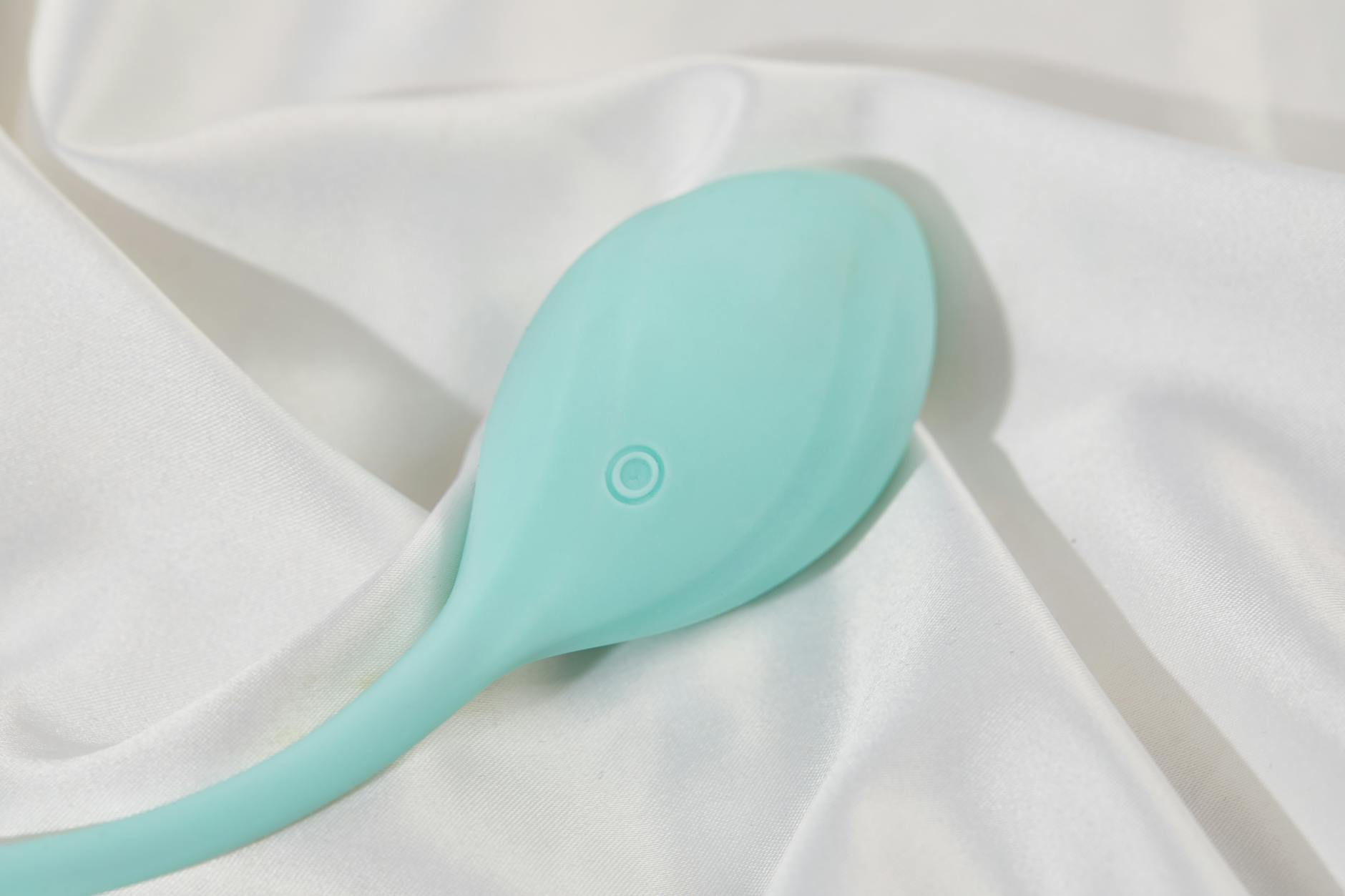
The thing nobody tells you about antidepressants and sex
Antidepressants work. They genuinely do. And they also absolutely flatten your capacity for orgasm. Both things are true at the same time, and both matter.
About 40 to 60 percent of people taking SSRIs (selective serotonin reuptake inhibitors) experience sexual dysfunction, according to clinical data. That includes delayed orgasm, reduced sensation, or complete inability to come. Your doctor probably mentioned this once during a rushed appointment and moved on. It's one of those side effects that gets buried because fixing depression takes priority over fixing pleasure. Except those two things aren't separate.
Here's what I see in my therapy practice over and over: people stay on antidepressants that genuinely help their mental health, then quietly give up on orgasm entirely. They assume it's permanent. They assume it's the price of staying stable. Then they try a lemon vibrator, everything changes, and they realize they were just looking for a different approach.
Why antidepressants change orgasm in the first place
SSRIs work by increasing serotonin availability in your brain. Serotonin is great for mood regulation. It is aggressively bad for sexual function. Here's the mechanism: serotonin dampens dopamine release. Dopamine is what triggers arousal, orgasm, and the reward sensation when you climax. When dopamine is suppressed, the whole chain reaction stalls.
The second layer is physical. Serotonin also affects the sympathetic nervous system. A calm nervous system (high serotonin) is good for anxiety. But arousal and orgasm require sympathetic activation. You need some activation, some edge, some pushing forward. SSRIs can leave you feeling like you're trying to come while the brake is still on.
Tissue sensitivity also decreases. Genital sensation itself becomes muted. Many people describe it as touching their clitoris through a veil. The nerve endings are still there. The signals are just quieter.
Why a lemon sucker works where standard vibrators don't
A standard vibrator relies on friction and intensity. It sends a continuous signal to your nerve endings, hoping one of them lands hard enough to register. If your medication has already quieted that signal, you're asking a weak broadcast to get louder. It doesn't work.
A lemon clitoral vibrator uses suction and pulsing rhythm instead of pure vibration. That's a completely different neural pathway. Suction creates a pressure change, a sucking sensation that stimulates deeper nerve clusters rather than surface sensation. It's not trying to overwhelm quieter signals. It's accessing a different communication channel altogether.
For people on antidepressants, this often means the difference between nothing and everything. The sensation travels through a route that the medication hasn't completely muted. I've had clients tell me that the Lem, Hello Nancy's lemon vibrator, was the first time in years they felt anything at all.
The settings and rhythm that actually work
Start lower than you think. If you'd normally begin at level 5 on a standard vibrator, begin at level 1 or 2 with a lemon clitoral vibrator. Suction is concentrated. You're not building tolerance by being gentle. You're training your nervous system to recognize what's being offered.
Dwell time matters more than intensity. Let the suction pulse work for 30 to 60 seconds on one rhythm before changing patterns. Your brain needs time to process the signal. Antidepressants slow arousal buildup. Patience here is the active ingredient. Many people need 20 to 30 minutes of warm-up before anything registers.
Layered sensation helps. Use water-based lubricant even if you don't think you need it. The movement of the lube creates micro-texture that your quieted nerve endings can actually detect. Some people pair the lemon sucker with a clitoral vibrator on low speed simultaneously. The suction handles the depth signal. The vibration adds surface detail. Together they often re-establish the full sensation picture.
Pattern 3 or 4 (the mid-range rhythms) tend to work better than straight pulse for medication-dulled sensation. The variation gives your nervous system more information to process. Your brain can track a pattern better than a constant tone.
The emotional piece that makes the physical work
There's a psychological layer here that doctors don't always address. After a year of not being able to orgasm, many people build genuine anxiety around trying. The anticipation of failure makes the whole system tighter. Antidepressants are already making arousal harder. Add performance anxiety and you've created a perfect storm.
When you switch to a lemon vibrator, you're not just changing the tool. You're changing the story. You're saying "this is new, we're starting over, the old rules don't apply." That mental reset matters.
I recommend starting alone and giving yourself explicit permission to not come. Your only job is to notice sensation. Can you feel the suction? Can you feel the rhythm? Can you feel anything at all? When the goal is sensation rather than orgasm, anxiety drops. And when anxiety drops, orgasm becomes possible.
Most people who succeed with a lemon clitoral vibrator after antidepressants describe a pattern: nothing for the first few tries, then a small spark in week two or three, then something closer to a full orgasm by week four or five. It's not instant. It's not a magic device. But it works because you're accessing a neural pathway that your medication hasn't completely blocked.
Talking to your doctor about what you're trying
Honestly, most doctors won't have a strong opinion about switching to a lemon vibrator. They understand the mechanism (different stimulation method), and they're generally relieved you're not stopping your medication to fix the problem.
What's worth discussing with your psychiatrist or GP: whether your specific SSRI is the one causing the most sexual dysfunction. Some SSRIs have less impact than others. Sertraline and paroxetine tend to be the worst offenders. Bupropion actually increases dopamine and often improves sexual function. If you're four or five months into medication and the flatness isn't improving, that conversation is worth having.
Timing can also help. Some people find that taking their SSRI at night rather than morning creates a small window in the morning or late afternoon when sensation is slightly less dampened. Again, ask your doctor. Don't change your regimen on your own. But this is a legitimate conversation.
The core thing to know: antidepressants are not a reason to give up on pleasure. They're a reason to get creative about how you access it.
FAQ: Antidepressants, sensation, and lemon clitoral vibrators
Q: Can you orgasm while taking SSRIs, or is it really impossible?
A: Orgasm is not impossible. It's delayed and muted for many people, but it's absolutely achievable. The key is working with your nervous system rather than against it. A lemon clitoral vibrator bypasses the pathways most affected by medication and accesses sensation through suction and pulsing rhythm instead. With patience and the right approach, most people regain the ability to orgasm. It typically takes three to six weeks of consistent practice.
Q: Will stopping my antidepressant bring back normal sensation?
A: Probably, yes. But that's not a reasonable trade. Coming off SSRIs without medical supervision is dangerous and often results in withdrawal symptoms, relapse, and emotional destabilization. If your medication is essential for your mental health, it's not the variable to change. Instead, change your approach to pleasure. A lemon sucker is far safer than quitting a medication that's keeping you stable.
Q: How is a lemon vibrator different from a regular vibrator for someone on antidepressants?
A: The core difference is mechanism. Regular vibrators use continuous or pulsed vibration to stimulate surface nerve endings. A lemon clitoral vibrator uses suction and pressure changes to stimulate deeper nerve clusters and creates a different sensory signal entirely. For someone on an SSRI, whose dopamine and arousal pathways are already dampened, that different pathway often works when standard vibration doesn't. It's not about being "stronger." It's about reaching the body through a route the medication hasn't completely blocked.
Q: How long does it take to feel sensation again?
A: That varies. Some people notice a difference in the first session. Many take two to three weeks of regular use before sensation starts returning. A few need four to six weeks. Consistency matters more than intensity. Using the lemon vibrator three to four times per week for 20 to 30 minutes is more effective than a single marathon session.
Q: Can you use a lemon vibrator if you're also taking other medications?
A: Almost always, yes. Lemon clitoral vibrators are external devices. They don't interact with medications the way medication combinations do. That said, if you're on multiple medications affecting sensation (certain antipsychotics, blood pressure medications, or pain medications can also dull sensation), you might need more patience with a lemon sucker. The principle remains the same: suction-based stimulation often works when vibration alone doesn't. If you're unsure, ask your doctor. It's a simple conversation and they're unlikely to have concerns.
Q: Is it okay to use a lemon vibrator every day?
A: Yes, though you don't need to. Many people find that using it three to four times per week is optimal. Overwashing the body into sensation usually backfires. It creates frustration and reduces the novelty of the experience. Daily use is fine if you're enjoying it, but if you're using it to force an outcome, dial it back. Let your nervous system have time to reset between sessions. Quality of attention matters more than frequency.
The thing about pleasure and medication
You don't have to choose between mental health and sexual function. That's a false choice that keeps people stuck. Antidepressants save lives. A lemon clitoral vibrator restores one of the things those medications temporarily take away.
If you're curious about reconnecting with sensation while on medication, give yourself three weeks of consistent, pressure-free exploration. Start low, go slow, and notice what your body can actually feel when you're not forcing it. Most people find that sensation is still there. It's just quieter. And a lemon sucker is often exactly the right volume.
Want to talk through what's happening in your relationship around this shift? Reach out. That's what I'm here for.