
Let's start with the real thing
You want to bring a lemon vibrator into your relationship, but the word "vibrator" in your mouth feels wrong. Your partner might feel threatened. They might think you're saying something about them. Or you'll say it and they'll just go silent and you'll both pretend it never happened.
Here's what actually happens when couples introduce toys well: nothing bad. No rejection, no resentment, no weird shame spiral. Just a conversation that opens instead of closes.
Why this conversation feels so loaded
Toys carry baggage that has nothing to do with toys. In your head, introducing a vibrator means admitting one of three things: "I'm not satisfied," "I'm weird," or "I don't trust you enough to be honest." None of those things are true, but that's what the silence around toys teaches us to believe.
Your partner's anxiety works the same way. They hear "vibrator" and translate it to "I'm not enough" or "You've been thinking about this for a while and didn't tell me." The gap between what you mean and what they hear is enormous.
The fix is separating the conversation from the assumption. You're not saying anything about what you already have. You're saying something about what you both could explore.
The frame that actually works
Forget the word "vibrator" as your opening. Start with sensation and curiosity instead. Here's the shape of it.
Step one: context, not confession. Pick a relaxed moment that's not in bed. A walk, during dinner, after a show. Anywhere you can talk without bodies being involved. Say something like: "I've been thinking about how we could experiment with touch in a different way. Not because anything's wrong, but because I think it could feel good for both of us."
That's the whole opener. You're naming curiosity, not disappointment. You're including them ("both of us"), not isolating yourself.
Step two: answer the unasked question immediately. They're thinking "Are they saying I'm not enough?" So say it directly. "This isn't about you. It's about exploring something new together. I want to try it with you, not instead of you."
Step three: give them information, not pressure. Tell them what you're actually thinking about. "There's a toy called a lemon vibrator that uses suction instead of just vibration. I read that it works differently than traditional toys, and I'm curious about trying it together." You're being specific, which makes it less scary than vague.
Step four: ask what they need. "What would help you feel good about exploring this? Do you want to research it first? Do you want time to think?" This flips it from "I want to do this and you have to accept it" to "We're figuring this out together."
The timing piece everyone forgets
Don't introduce the idea during sex. Your brain is flooded with oxytocin and you're vulnerable. Your partner is the same. That's not the moment to ask them to think about something new.
Don't do it when you're frustrated, either. "Maybe if we had a vibrator you'd actually want to have sex" is not the same conversation. That one is resentment dressed up as a suggestion.
The sweet spot is calm, clothed, and when you both have mental space. That means not five minutes before they have to leave for work, and not when they're stressed about something else. Pick a Friday night or a Sunday morning when nothing is urgent.
What to do if they get defensive
Some partners will say "I don't need a toy to please you" or "Why would you want that?" That's fear talking, not the actual conversation.
Don't argue. Don't defend yourself. Just clarify.
"I'm not saying you need anything. I'm saying I want to try something different, and I want to try it with you. It's about adding something, not replacing anything."
If they need time, give it to them. Don't push. Say "I know this is new. Think about it. We can talk whenever you're ready." Then actually drop it. Don't bring it up every other week or they'll feel hunted.
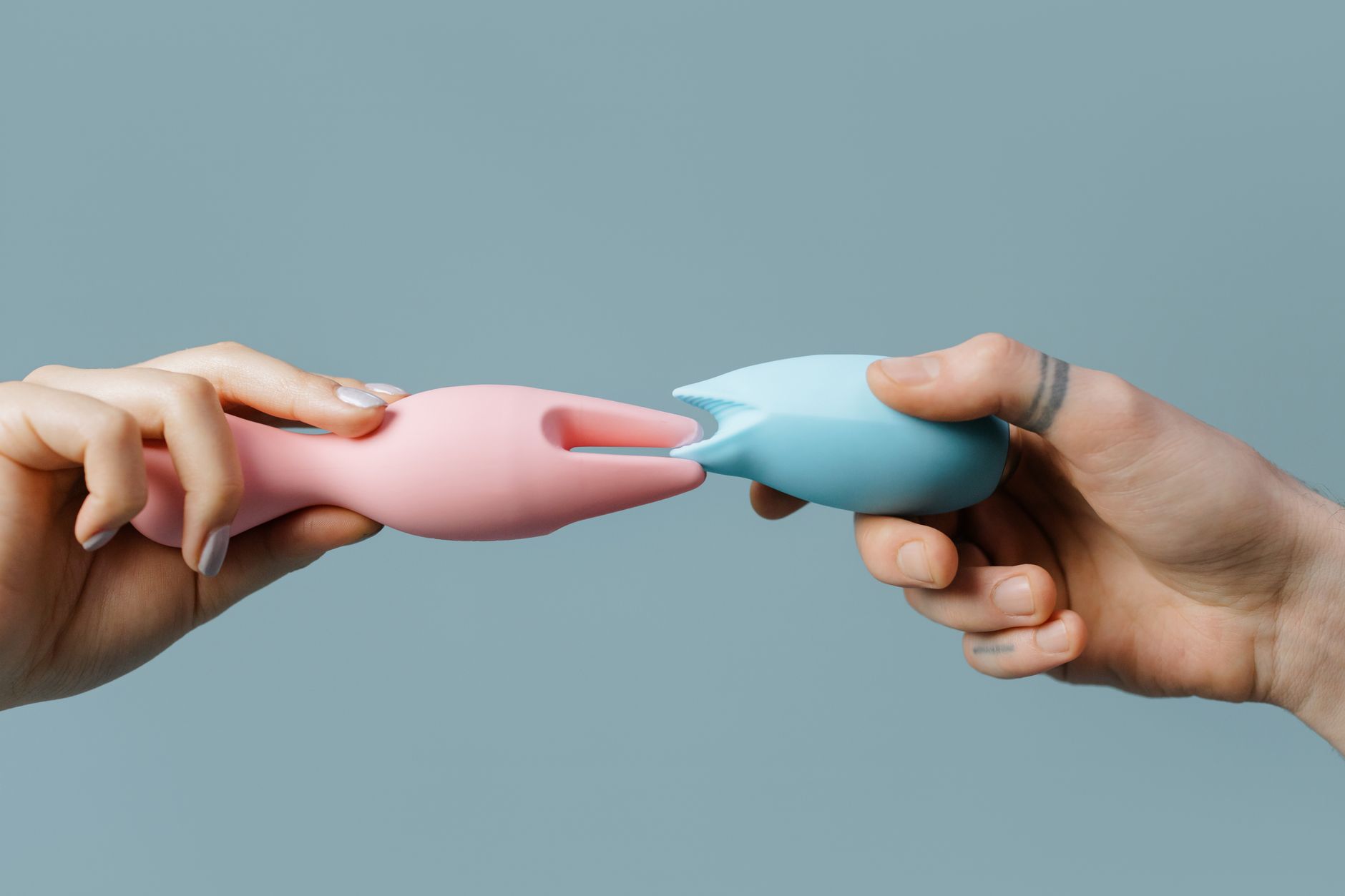
Photo by cottonbro studio on Pexels
If they come back with questions, treat every one seriously. "What does it feel like?" "Does it work on everyone?" "Will it make sex weird?" These aren't rejections. They're engagement. Answer them honestly.
The invitation that lands
Once they've had time to think, here's how to move from idea to actually trying it.
Don't say "Let's use it now." Suggest experiencing it together in a low-stakes way first. "What if we just looked at one together?" or "Want to read about how it works?" This removes the performance pressure.
When you do try it, the setup matters. Make sure you have time. No rushing. Have lubrication that actually works. Create an environment where you both feel safe. Close the door. Put your phone away.
Start slow. If you're using a lemon clitoral vibrator, let your partner hold it first. Let them explore the sensation on their own before you're involved. This shifts it from "you're doing something to me" to "we're both discovering this."
Talk during. "Does this feel good?" "Want me to try it?" "That's so hot." Communication keeps it connected. Silence makes it feel clinical.
When a partner is enthusiastic but hesitant about suction
A lot of people are nervous about how suction toys work. They imagine something intense and scary. It's not.
If your partner is hesitant, start on the lowest setting. The lemon vibrator has multiple patterns. You don't jump to intensity one. You start at a whisper. And you use it for short bursts at first, not long sessions.
Let them control when you start and stop. "Tell me if you want me to turn it off" is a sentence that changes everything. It puts the power back in their hands, which dissolves the nervousness.
The conversation after
Here's what most couples skip and shouldn't: talking about it when you're not actively using the toy.
The next day or the next time you're talking, circle back. "I loved trying that with you" or "I felt really connected to you during that" or even "That was interesting, I want to think about it." Whatever is true.
This tells your partner the experience mattered to you beyond just the sensation. It was intimate. It was about closeness.
If they didn't love it, that's information too. "What didn't work?" "Want to try something different?" "Let's take a break from it." Any of those are fine. The point is, you tried together and you're still talking about it like grown people.
People also ask
What if my partner says no to using a toy altogether?
That's their boundary and it's okay. You can ask why and listen. Sometimes the no is temporary. Sometimes it's real. Either way, pushing makes it worse. If toys are important to you and your partner has a hard no, that's worth exploring in therapy together. A couples counselor can help you both understand what the toy symbolizes and whether there's middle ground. But forcing the issue will only deepen resentment.
How do I know if my partner is just saying yes to make me happy?
You listen for the energy. There's a difference between "I'm open to trying" and "I'm enthusiastic about trying." If they sound uncertain, check in. "Are you actually into this or are you doing it for me?" Honesty matters more than enthusiasm. A reluctant yes that turns into resentment is worse than a genuine "I'm not sure yet but I'm willing to explore it."
Should I introduce the toy or should they?
Whoever is more comfortable with it should take the lead during the first experience. But the suggestion should come from the person who wants to try it. If you're suggesting it, you're the one who initiates. That's not unfair. You're being honest about your desire, which is actually the most intimate thing you can do.
What if we start using the toy and I get insecure?
That's normal and worth naming. "I'm feeling a little insecure right now" is a sentence you can say mid-experience. Your partner can pause. You can talk. You can start again when you feel better. Toys are supposed to bring you closer, not create distance. If insecurity is coming up, slow down and reconnect.
Can a lemon vibrator change our relationship for the better?
Not by itself. But the conversation around it can. When you can talk openly about desire and curiosity with your partner, everything shifts. You're practicing vulnerability. You're practicing asking for what you want. You're practicing receiving your partner's desires without defensiveness. Those skills carry into every part of your relationship.
How many times should we use a lemon vibrator before it feels normal?
Everyone's different. Some couples use it once a month. Some use it regularly. The thing that makes it "normal" is not frequency. It's treating it like any other part of your intimate life. You don't have to announce it every time. You don't have to make it a special occasion. It's just another way to be together. When it stops feeling like a big deal, that's when it actually becomes normal.
The real shift
Introducing toys to your relationship is really about introducing honesty. You're saying "Here's something I want to explore. Here's the real version of me." Your partner gets to respond to that, which means they also get to share their real desires. That conversation, done well, is the actual gift. The toy is just an excuse to have it.
If you're both nervous, that's fine. Nerves mean something matters. The key is moving through the nervousness together instead of letting it silence you both. Start with the conversation. Do it when you're calm. Be specific. Listen to their fears without defending yourself. Then, when you're both ready, explore together.
Your partner isn't going to think you're weird. They're going to feel trusted. And that changes everything.