
Let's be real about the silence first
Most couples don't talk about bringing a lemon vibrator into their intimate life. One person thinks about it. Fantasizes about it. Maybe researches it. Then either surprises their partner with it (often awkwardly) or says nothing and the moment passes. Both routes tend to create the opposite of what you actually want: clarity, excitement, and shared ownership.
Here's what I've seen in 20 years of couples therapy: the couples who navigate this conversation well don't have better toys or more adventurous sex. They have better communication. And that skill carries into every other part of their relationship.
Why this conversation matters more than you think
Introducing a clitoral vibrator into partnered sex triggers something bigger than logistics. It touches on desire, adequacy, fantasy, and whether your partner will feel replaced or partnered with. These feelings exist whether they're named or not. Naming them is the only way through.
I've worked with couples where one partner felt genuinely hurt that their partner wanted external stimulation. Not because they're insecure, but because nobody explained that a lemon sucker vibrator isn't about the partner failing. It's about the body responding differently when two different types of stimulation happen at once. The science matters here because it removes the ego.
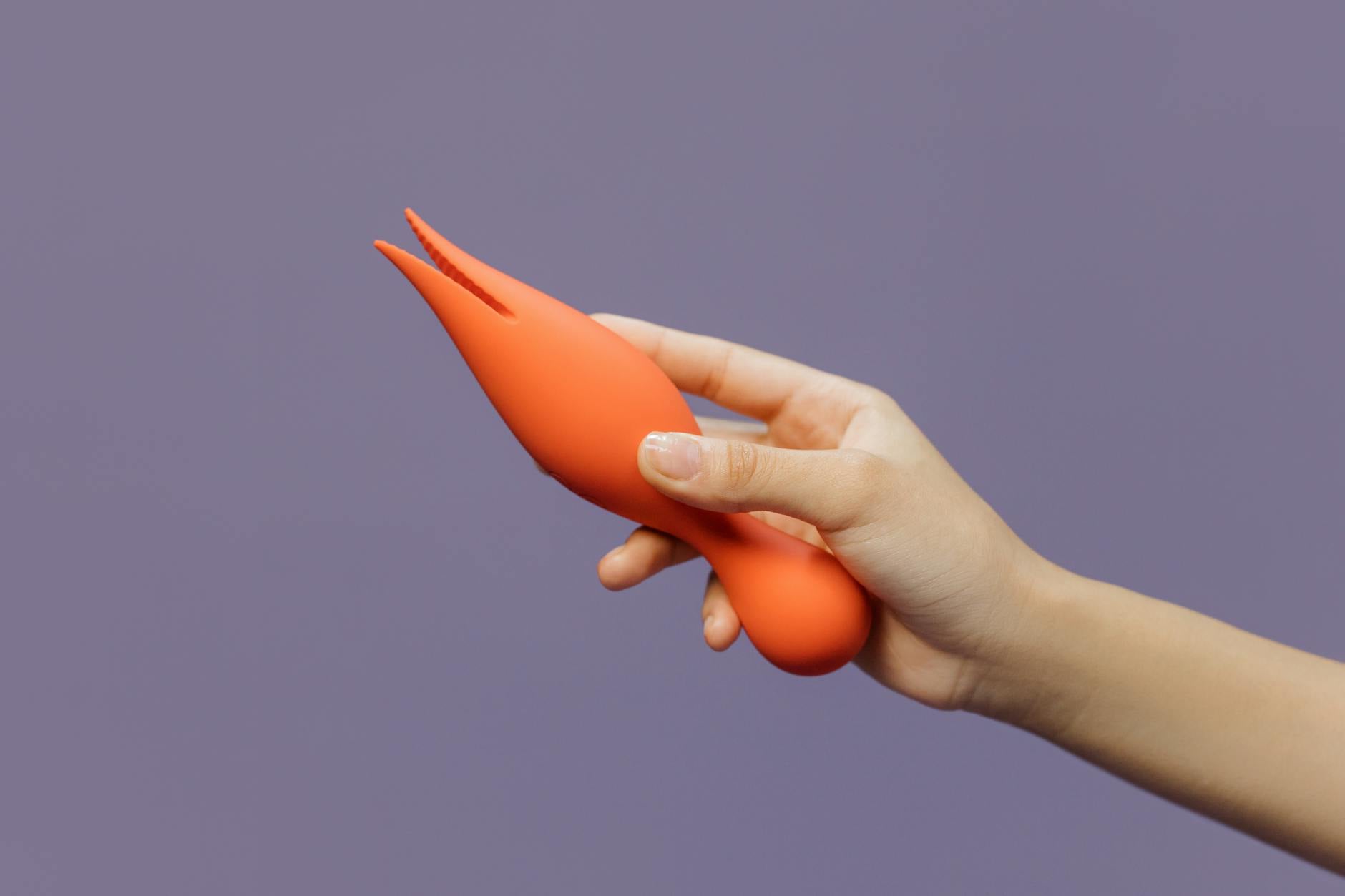
Photo by cottonbro studio on Pexels
When to bring it up (timing is not romantic, it's strategic)
Don't do this during sex. Don't do this after sex when you're both vulnerable. Don't do this during an argument about your intimate life. Don't do this after drinking.
Do it during a calm moment when you're both clothed, fed, and have time to talk without rushing. Afternoon coffee. Sunday walk. Sitting on the couch with no screens. You want a conversation, not a performance.
Pick a time when you've been feeling connected recently, not after a dry spell. Dry spells create urgency and desperation in the framing, and the conversation becomes about fixing a problem instead of exploring something together.
How to open the door (the actual words matter)
Avoid: "I've been thinking we should try toys" or "Our sex life could use some spice." Both sound like criticism.
Try: "I've been curious about something and I want to talk about it with you. I'm not saying anything is wrong. I'm genuinely interested in exploring what might feel good for us together."
Or: "I read something about how different types of stimulation can change the experience. I'm interested in trying it. Want to hear about it?"
The difference: the second version leads with curiosity and partnership, not problem-solving. You're inviting them into an experiment, not asking them to fix you.
If your partner gets defensive, pause. Don't push. Say something like, "This isn't about me wanting something you're not giving me. I just wanted to explore together. No pressure either way."
The questions to answer together (before you buy anything)
Having this conversation prevents the toy from becoming a symbol of unspoken tension. Ask your partner:
What would feel good to you about this? Some people want to watch. Some want to focus on their own pleasure while you use one. Some want to use it on you. Some want something that doesn't change the physical position you're already in. Ask instead of assuming.
What worries you about it? Shame, replacement anxiety, feeling like it's "too much," physical discomfort, not knowing how to handle it. Get it into the light. Almost every concern has a simple answer once it's named.
Do you want to build toward this or start with it? Some couples prefer to integrate a clitoral vibrator gradually into existing patterns. Others want to plan a specific night for it. There's no correct answer.
What would make this feel good to both of us? Maybe that's doing research together. Maybe it's choosing it together. Maybe it's one person choosing but showing the other first. Buy-in works differently for different people.
Why the specific tool (a lemon vibrator) is easier to talk about than you think
Clitoral suction vibrators like the Lem work differently than traditional vibrators because they're additive, not replacement. You can still be inside your partner while using one. The sensation is concentrated rather than broad. There's no competing for positioning.
This actually makes the conversation easier because you're not proposing something that changes the core of what you already do together. You're proposing something that enhances it. That's a different psychological offer.
When you're talking to your partner, you can say, "I'm not looking to change what we do. I'm thinking about ways to add to it." That distinction alone shifts the whole conversation from substitution anxiety to collaboration.
What to do after you've agreed (managing expectations is where this gets real)
First time you use it, something might go wrong. You might laugh awkwardly. One of you might lose focus. The angle might be weird. It might feel amazing and you'll wonder why you waited so long.
All of these are normal. The agreement before you start should be: we're experimenting, not performing. If anything feels off, we pause without shame. We can talk about it immediately or the next day. No judgment.
Also name this: it might take a few tries to figure out what works. The positioning, the rhythm, the combination of things. That's fine. You're learning together. This is collaborative problem-solving, not a failure.
After the first time (how to debrief without overthinking)
Don't immediately analyze what happened. You're still biochemically in the bonding phase if it went well, or in the vulnerable phase if it felt awkward. Just be present.
The next day, you can ask casually: "That felt nice to me. How was it for you?" Not "did you like it" but an open-ended reflection. Your partner might say "I need to think about it," and that's okay. Some people process slowly.
If it didn't feel good for one of you, that's actually useful information. "I felt self-conscious" is different from "it didn't feel good physically." Different problems have different solutions. One might be a different position. One might be trying it again with more familiarity. One might be realizing this isn't for you right now, and that's fine too.
When to bring a professional in (therapy is not a last resort, it's a tool)
If the conversation derails into something bigger (resentment about your sex life, feeling unheard, questioning the relationship), that's actually a gift. It means you've uncovered something that needed attention anyway. A couples therapist can help you navigate that. It's not a sign you're broken. It's a sign you're ready to get better at communicating.
Sometimes talking about sex opens the door to talking about other things. That's the point. Partnership is built on this kind of honesty.
The truth they don't tell you
The couples who successfully introduce toys together aren't more adventurous or more sexually confident than anyone else. They're just willing to talk about what they want instead of hoping their partner reads their mind.
That conversation is the real intimacy. The lemon sucker vibrator is just the tool. What matters is that you chose it together, talked about it together, and discovered it together. That's partnership.
People also ask
How do I bring up wanting to use a lemon vibrator if my partner has never mentioned sex toys?
Start with curiosity instead of desire. "I read something interesting about how different types of stimulation work" is lower stakes than "I want to use a vibrator." You're not asking permission. You're inviting them into exploration. If they're resistant at first, give them time. Sometimes hearing about it once plants a seed that grows into openness weeks later.
What if my partner says no?
Respect that. Pushing creates resentment. Instead, ask why. Is it disgust? Fear? Religious or cultural values? A feeling of inadequacy? The answer determines the path forward. For some couples, the answer stays no, and that's the boundary. For others, it's a "not now" that might shift with time or conversation. Neither is wrong.
Can we use a lemon vibrator if my partner has performance anxiety?
Actually, yes. For some people with performance anxiety, bringing in a clitoral vibrator removes pressure because orgasm feels less dependent on their specific actions. It becomes about shared pleasure instead of proving something. That said, performance anxiety is real and might need its own attention separately from the toy conversation. Consider working with a therapist on that piece too.
What if one of us wants it and the other doesn't?
That's a negotiation, not a veto. "I don't want to use it together" is different from "I don't want you to use one ever." You might use it alone sometimes and with your partner other times. Some couples find a compromise: trying it a certain number of times, then reassessing. Others find that once someone experiences how it changes sensation, initial resistance softens.
How do I know if we're ready for this conversation?
You're ready when you can ask for something without shame and listen to the answer without defensiveness. That's not about sex. That's about the relationship baseline. If you can't disagree about small things without it becoming a fight, you're not ready yet. Build that foundation first. Then this conversation becomes much easier.
Is it normal to feel nervous before bringing this up?
Completely normal. You're about to talk about desire, which feels exposed. You're risking your partner saying no or getting hurt. That vulnerability is real. Honor it. You can say that too: "I'm a little nervous talking about this because I care about how you feel." Honesty about your own discomfort makes the whole thing feel more human and less like a performance.
The move forward
The conversation about adding a clitoral vibrator into your shared intimate life is not about the toy. It's about whether you can ask for what you want and listen to what your partner wants without shame or defensiveness. That skill matters in sex and everywhere else.
Start the conversation. Listen more than you talk. Be specific about what you're asking for. And remember: the couples who thrive aren't the ones with the most adventurous sex. They're the ones willing to keep talking.
If you want more guidance on navigating couple dynamics and intimacy, reach out. That's what I'm here for.