
The conversation that happens before the toy
Let's be real: bringing up a lemon vibrator with a new partner when you're both toy-novices feels like stepping into a minefield. One of you is worried the other will think they're not "enough". The other is bracing for judgment. Neither of you knows if this kills the mood or deepens it.
Here's what I've learned working with couples navigating this exact moment. The toy isn't the actual conversation. The conversation is about desire, curiosity, and whether you can be honest about both.
That matters way more than the vibrator itself.
Why new couples avoid this talk
When you're fresh with someone, there's a performance element baked in. You're both trying to figure out what the other person wants, what feels safe to ask for, whether vulnerability is welcome. A lemon clitoral vibrator shows up in this space like a lie detector test. It forces specificity. It requires words.
Most people skip it entirely. They figure "once we're more comfortable" or "if they bring it up first." What actually happens: months or years pass, and the moment never feels right because you're waiting for permission that the other person is also waiting to give.
Introducing a toy early, before those anxiety patterns calcify, is actually easier. The stakes feel lower because you haven't yet built an entire sexual history around not needing one.
How to open the door without pressure
Three frames that actually work:
Frame 1: Curiosity, not criticism. "I've been reading about lemon vibrators and they sound interesting. Have you ever used toys before, or is this totally new territory for both of us?" This isn't "I need more stimulation than you're giving me." It's "I want to explore something together."
Frame 2: Low stakes. "I'm not saying we have to try it tomorrow. I just wanted to know what you think about the idea. No pressure either way." This gives them room to sit with it. People need processing time. Some partners need a week to move from "that's weird" to "actually, yeah, let's try it."
Frame 3: Shared benefit. "The thing about lemon vibrators is they can feel really good for whoever is receiving, but also sometimes partners like watching. It could be fun for both of us." You're not asking them to perform their approval. You're inviting them into an experience.
When they say no
Some partners will genuinely not want toys in the bedroom. That's valid. It might be a dealbreaker for you, or it might be something you shelve for now. But here's what I tell couples: their no often isn't actually about the toy. It's about feeling replaced, or losing control, or exposure (literally being exposed while a device is there), or religious belief, or something else entirely.
If you want to understand the real reason, ask. "When you think about using a lemon vibrator together, what comes up for you?" Listen without defending. The answer isn't "why you're wrong." It's data about what they need to feel secure.
Sometimes that means more foreplay first. Sometimes it means they watch you use it solo while they stay clothed. Sometimes it means waiting until the relationship has more trust bandwidth. All of those are fine.
When they say yes (and you're both nervous)
You've made it past the conversation. Now what?
Don't go straight to using it. Sit with it first. If you've bought a lemon sucker or a clitoral vibrator like the Lem, have it visible on the nightstand for a few days. Normalize it. Let your brain catch up to the decision.
When you're actually ready, create conditions that lower performance pressure. This means:
Clothes off, but not in penetration position. You're both lying down, you're both undressed, but you're not locked into "this is heading toward sex." This gives your nervous system permission to stay curious instead of snapping into goal-oriented mode.
Start with them watching, not touching. Let them see you use a lemon clitoral vibrator on yourself first. This does two things. One: they realize the device isn't replacing them, it's augmenting your own pleasure. Two: it gives them a roadmap of what feels good so they can eventually participate without guessing.
Talk during. "This feels good here." "I like this setting better." "Your hand here would feel amazing right now." You're building a shared language. You're also keeping their nervous system engaged instead of letting them spiral into self-doubt.
The suction surprise
If you're using a lemon vibrator like the Lem, your partner might be surprised by the suction sensation. It's not a vibration pattern they understand yet. They might worry it hurts, or wonder why you're enjoying it, or feel excluded by a sensation they can't replicate with their own body.
Take thirty seconds to explain: "It's not pressure. It's a gentle suction, kind of like the feeling of a mouth, but more consistent." You could even let them feel it on their own hand first, on a low setting. Demystification drops defensive walls fast.
When to invite them to participate
After you've used it solo while they watch (could be one session, could be three), you might ask them to hold it. "Would you want to try using it on me?" This shifts the dynamic completely. Now they're the agent. They have control and purpose. It's collaborative.
Some people relax immediately. Others feel anxious about "getting it right." Reassure them: "Just follow what feels good. You'll know because my body will respond. There's no wrong way." And if they press it too hard or move too fast, gently redirect. "A little lighter. Slower. Yes, like that."
This is intimacy work. You're teaching each other how to give and receive pleasure in a new way. That's the whole point.
What to do after
The session ends. Now what. Some people want to debrief immediately. Others need to be quiet for a bit. Some want to have sex. Some want to cuddle. Check in: "How are you feeling? That was cool, right?"
Don't create the impression that the toy was a substitute because something was missing. Say something like: "I really liked that. And I liked being with you while we tried it." The toy is a tool. You're still the reason they're in bed.
If there's weirdness, name it gently. "I noticed you seemed quiet after. Everything okay?" Give them a chance to process. Sometimes partners need to sit with the reality that their body responded to something new, and that can feel disorienting in a good way.
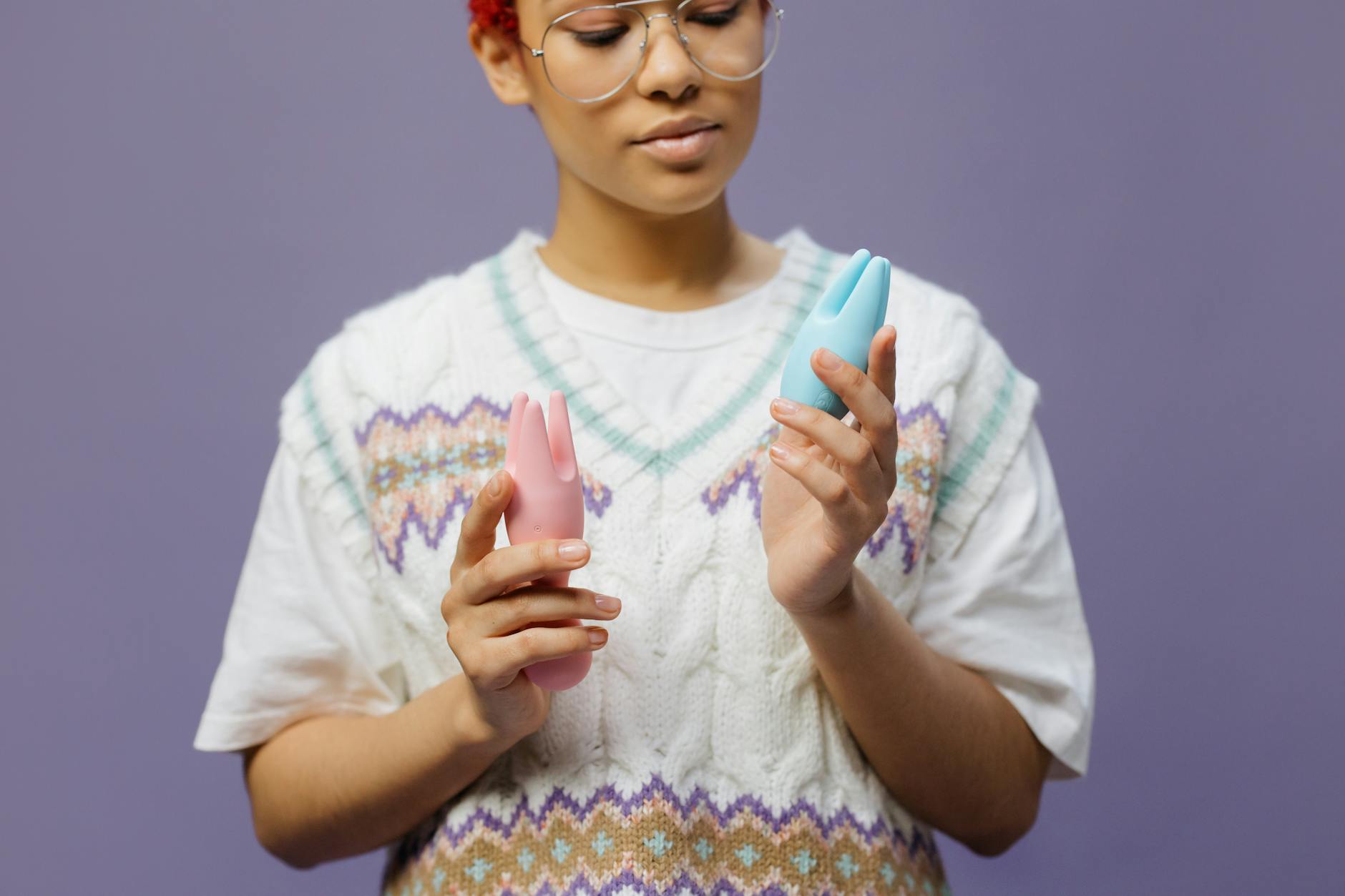
Photo by cottonbro studio on Pexels
The conversation after the first time
Once you've both experienced a lemon vibrator together, the conversation shifts. You're no longer negotiating whether toys are "okay". You're talking about preference. "I liked it better when you held it." "I want to try a different pattern next time." "It felt weird with the lights on." These are data points, not character judgments.
You might also discover that one of you wants to use it more often, and the other wants it occasionally. That's completely normal. You're learning each other's pleasure maps. You're building a shared sexual vocabulary. This takes time.
When one partner wants more and the other wants less
Sometimes introducing a lemon clitoral vibrator early can reveal a mismatch in desire frequency or intensity. You might discover you want to use it every time you have sex, and they want it once a month. Or vice versa. This isn't a failure. It's information.
The fix is the same one you'd use for any desire mismatch: compromise and curiosity. "What if we use it twice a week instead of every time?" "Tell me what turns you on about the toy." "Is there a version of this that feels good for both of us?"
Many couples find that exploring toys together actually opens up conversations about pleasure that felt impossible before. Suddenly you're talking about sensation, rhythm, intensity, what you actually like. Those conversations happen to be foundational to long-term sexual satisfaction.
A note on shame
If you're introducing a lemon sucker or other toy to a new partner, you might bump into inherited shame. Maybe they grew up with messaging that masturbation was wrong, or that women's pleasure wasn't the priority, or that using toys meant something about their masculinity or your loyalty. That's not something a vibrator fixes. But it's something that opens up in the presence of a vibrator.
If shame shows up, slow down. You don't have to keep going. You do have to talk about it eventually, though. A sex therapist or relationship counselor can help navigate that conversation if it's big. Sometimes it just needs time and reassurance.
Making it part of your story
New couples who explore toys together early often report that it becomes a connector, not a divider. You tried something vulnerable together. You figured it out. You got curious about each other's bodies and desires. That builds a kind of intimacy that sticks.
The goal isn't to have "perfect" toy sex. It's to create a space where both of you can be honest about pleasure, ask for what you want, and know you won't be judged for it. A lemon vibrator is just the device. The real thing you're building is trust.
Frequently Asked Questions
How do I bring up lemon vibrators if I'm worried they'll think I'm not satisfied with them?
Frame it as addition, not replacement. "I love being with you and I'm also curious about exploring something new together" is different from "I need this because you're not enough." The first is about shared pleasure. The second is about lack. One partner feels invited. The other feels criticized. Make sure you're saying the first thing.
What if they say they want to use a toy on their own first before trying it together?
That's actually smart. It means they're curious but they want to understand the sensation without performance pressure. Let them explore solo. Later, they'll bring less anxiety to the couple experience. You might even ask them to tell you what they learned so you're both going in informed.
Is it weird to use a lemon vibrator if we haven't had penetrative sex yet?
Not at all. Sometimes exploring a lemon clitoral vibrator before penetration actually makes penetration easier because you've both gotten comfortable with pleasure-focused touch that isn't about "going further." You've built a sexual history that's about sensation first. That's healthy.
Should I ask permission every single time we use it, or does that kill the mood?
The first time, yes. Definitely ask. After you've done it a few times and you know you're both comfortable, the permission can be less formal. A look. A gesture. "Want to?" But never assume consent, especially early on. Checking in isn't sexy until it becomes your normal, and then it becomes very sexy because it means you both trust each other.
What if we try it and it doesn't feel good for them?
That's data, not failure. Some people's bodies don't respond to suction stimulation the way a lemon vibrator provides. Some people need different patterns or intensity. Try a different setting. Try a different position. Try stopping and doing something else. Not every tool works for every body, and that's completely fine. You've still built intimacy by trying.
Can we use a lemon clitoral vibrator if we haven't talked about it as deeply as you're describing?
Yes. Some couples are more verbal processors and some aren't. If you're less talky, you might hand them your phone with a product page open, or bring a toy to bed without preamble and see what happens. But at minimum, you want to know they're interested. Even a non-verbal check-in counts: "Should we try this?" and a nod is consent.
Moving forward
Introducing a lemon vibrator with a new partner is actually one of the most intimate things couples can do early on. You're saying: I want you to know what my body likes. I trust you enough to be vulnerable. I think your pleasure matters too. I want to figure out how to give you both joy.
That doesn't happen because of the toy. It happens because you both show up willing to be curious. The tool just gives you a reason to have the conversation. The rest is on you. Start with honesty. Build from there. Want more guidance on navigating intimacy with a new partner? I'm here to help.