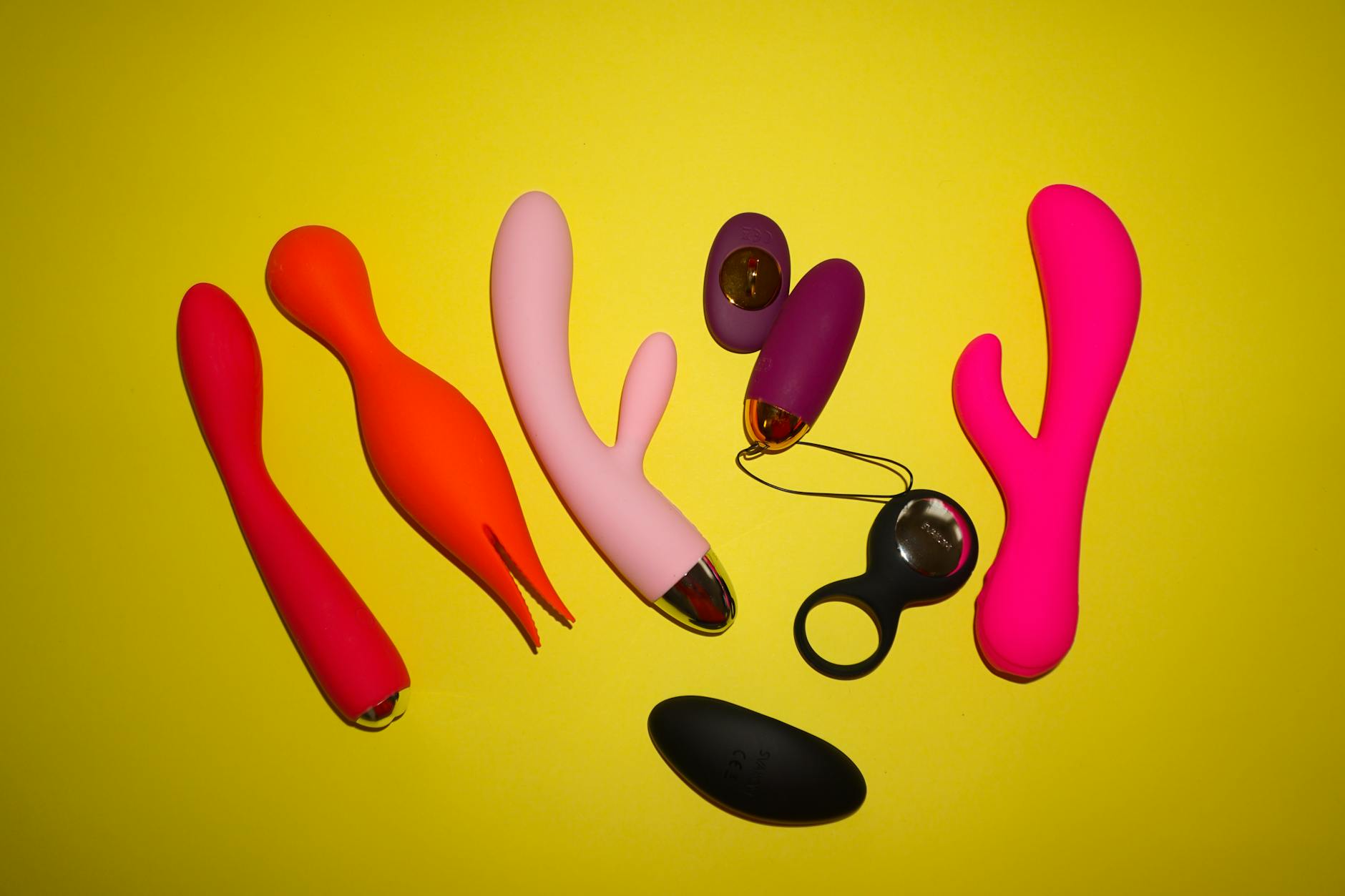
Here's what nobody tells you about slow arousal
Most of us grew up thinking arousal happens fast. You see something, you feel something, boom, you're ready. But that script doesn't match reality for a huge number of people. Your clitoris might need 20, 30, or even 45 minutes to fully wake up and respond. That's not a malfunction. It's how your nervous system works, and it's worth understanding before you reach for any toy.
The frustration starts when you expect speed and your body delivers something else. You reach for a lemon vibrator (or any vibrator) expecting immediate results, get impatient when sensation feels muted at first, and then assume either the toy doesn't work or there's something wrong with you. Neither is true. You've just got a nervous system that needs a warmup, and that changes how you approach pleasure.
Why delayed clitoral arousal happens
Your clitoris doesn't exist in isolation. It's wired to your brain, your pelvic floor, your blood flow, and your mental state. When any of those systems are taxed or distracted, the whole chain slows down.
Stress is the obvious culprit. When your nervous system is in fight-or-flight mode, blood pools in your core and limbs, away from your genitals. Sensation feels distant, muted, almost like you're touching someone else's body. Anxiety does the same thing. That running list of things you didn't do today? It blocks arousal like a gate.
But slower arousal also shows up when you're just tired, when you're cycling through certain hormone phases, when you've been on medications that flatten sensation, or sometimes for no reason at all other than how your body was built. As you get older, arousal often takes longer by default. Blood flow changes. Tissue responds more slowly. That's age, not decline.
The good news: understanding the why changes everything about how you use a lemon vibrator. You stop fighting your timeline and start working with it.
What a lemon vibrator actually does (and why it helps with slow arousal)
A lemon vibrator uses air-pulse technology, not traditional vibration. That means it creates suction and release patterns instead of buzzing. For slow-to-wake arousal, this matters because air-pulse stimulation wakes up sensation differently than direct vibration does.
Direct vibration can feel numb when your clitoris is still sleepy, which is why you might increase speed and end up with overstimulation or discomfort. Air suction, by contrast, engages deeper nerve clusters and blood flow more gradually. You feel something happening even when surface sensation is still quiet.
This also means a lemon clitoral vibrator rewards patience in a way other toys don't. You're not racing to the finish line. The pattern itself is designed to build, plateau, and intensify. That matches slow-to-build arousal better than most vibrators do.
The three-phase approach that actually works
Phase 1: Warm-up without the toy (10-15 minutes)
Start before you touch your clitoris with anything. Mental arousal comes first, physical arousal follows. This means settling your nervous system and letting your mind turn toward pleasure.
Take a bath. Light a candle. Put your phone in another room. Read something that gets you thinking. Watch something that sparks interest. Touch other parts of your body: your neck, your breasts, your inner thighs, the back of your ears. Notice where sensation feels good. This phase is not foreplay toward an orgasm. It's permission to slow down.
You'll know you're ready to move to the next phase when you notice increased blood flow to your genitals. This might feel like mild swelling, warmth, or increased wetness. Or it might just feel like a shift in your attention, like you notice your clitoris exists now when you didn't five minutes ago. That's the signal.
Phase 2: Introduction with low intensity (10-15 minutes)
Now introduce your lemon vibrator at the lowest setting. Don't go straight to the clitoris. Start on the outer labia, the mons pubis, the sensitive skin above your clitoris. Let the sensation spread.
The first 3-5 minutes on low, you're still waking things up. Sensation might feel numb, distant, or barely there. This is completely normal. Keep going. Don't increase intensity. Your nervous system is learning what the suction feels like, and your clitoris is getting blood flowing toward it.
Around minute 5-7, you'll start to notice a shift. Sensation sharpens. You feel the pattern more clearly. Pleasure starts building from a murmur to something you can actually track. This is where patience pays off. You're not pushing toward orgasm. You're following your arousal as it naturally builds.
If numbness persists beyond 10 minutes on low, try moving to the side of your clitoris instead of directly on it. Some people's nerve endings wake up faster with indirect stimulation.
Phase 3: Gradually increase intensity as sensation sharpens (10-20 minutes)
Only move to pattern 2 or higher once you feel clear, present sensation on the lower setting. This isn't arbitrary. It's following your body's signal that it's ready for more.
When you increase intensity, notice what changes. Does pleasure deepen? Does your pelvic floor tighten naturally? Are you breathing faster? These are all signs you're moving in the right direction.
Slow-to-build arousal often means your plateau phase is longer than you expect. You might sit at pattern 2 for 15 minutes, feeling steady pleasure but not building toward climax. That's fine. Let it be. Orgasm isn't the goal here. Sensation and presence are. If an orgasm comes, great. If not, you've still had 40 minutes of pleasure that your body needed.
Common mistakes (and how to avoid them)
Starting too high. This is the biggest one. When you start at pattern 3 or 4 on a lemon clitoral vibrator because you expect to move fast, your clitoris is still numb. You feel nothing, get frustrated, and think the toy or your body is broken. Start at 1. Always.
Assuming numbness means give up. Delayed arousal means the first 10 minutes will feel muted. That's not a stop sign, it's normal. Stay with it.
Expecting your partner to understand. If you share a bed or a body with someone, they might interpret slow warmup as "you're not attracted to them" or "something's wrong." It's not their fault. Most of us were never taught that arousal timing varies wildly. Before you use a lemon vibrator with a partner present, name the timeline: "I need about 30 minutes to really feel something. That doesn't mean anything about you, it's just how my body works right now." This reframes the entire experience.
Comparing yourself to porn or to your younger self. Fast arousal is not better than slow arousal. It's just different. Sometimes you'll have 5-minute warmup days. Sometimes you'll need 45. Both are you. Neither is wrong.
Environmental tweaks that actually help
Your surroundings matter more than you think when you need time to wake up.
Warmth helps. A warm room, warm bed, or warm bath increases blood flow to your genitals. Cold contracts everything, which is the opposite of what you want.
Privacy and time matter. If you're watching the clock because a partner will be home in 20 minutes, your nervous system knows it. Stress shuts down arousal before you even touch yourself. Give yourself real time.
Scent can help too. Specific smells trigger arousal centers in your brain. Some people respond to vanilla, some to citrus, some to their partner's cologne. Experiment without pressure. A scented candle might be all you need to shift your nervous system into receptive mode.
Music, or silence, or a podcast. Whatever quiets the mental chatter. Your clitoris can't wake up if your brain is still running through emails.
When to consider other factors
If you've given yourself real time, real privacy, and real warmth, and sensation still won't build beyond numb, something else might be happening.
Certain medications flatten sensation. SSRIs are notorious for this. Hormonal birth control can reduce clitoral sensitivity in some people. Low testosterone (which everyone with a vulva makes some of) can slow arousal. These aren't obstacles you can toy your way through. A conversation with a gynecologist or psychiatrist who understands sexual side effects is worth it.
Similarly, if arousal used to come faster and suddenly doesn't, that's information. Hormonal shifts, thyroid changes, or even relationship dynamics can rewire your timeline overnight. Slow doesn't always mean slow by nature. Sometimes it means something else is asking for attention.
That's when how to use a lemon vibrator when rebuilding intimacy after years of low desire becomes relevant reading, or when talking to a therapist about what's blocking arousal matters more than the toy itself.
The rhythm that works
Your clitoris is not a button. It's not something to unlock as fast as possible. Slow-to-build arousal, when you stop fighting it, often leads to deeper pleasure than quick arousal does. You've had 30 or 45 minutes to settle into your body. Your nervous system is calm. Your pelvic floor is relaxed. Your mind is quiet. That's the state where real sensation happens.
A lemon vibrator paired with patience and the right timing is often exactly what slow arousal needs. Not to rush it, but to follow it. To trust the pace your body has set. That takes practice, and it takes permission. But once you get there, you stop feeling behind and start feeling exactly right.
People also ask
How long should I wait before using a vibrator if arousal is slow to build?
I recommend at least 10 minutes of non-genital touch and mental settling before you introduce any vibrator. This gives your nervous system time to shift out of stress mode. For slow-to-build arousal specifically, 15-20 minutes of warmup helps signal your body that this is safe, private time. The longer the initial warmup, the faster the clitoral response usually becomes once you introduce the toy.
Can slow arousal be fixed, or will I always need this much time?
It depends on the cause. If slow arousal comes from stress or a specific medication, removing that stressor or changing medications might speed things up. If it's how your nervous system is wired, that's not fixable and doesn't need to be. Some people's bodies are built for slow burn, and that's not a problem to solve. Other people find that as they age or go through life changes, their timeline shifts multiple times. The question isn't "how do I make arousal faster" but "how do I accept and work with the timeline I have right now."
Is there a difference between slow arousal and no arousal?
Yes. Slow arousal means sensation builds gradually, but it does build. You eventually feel warmth, swelling, wetness, or increased sensitivity. No arousal means nothing shifts after 30-40 minutes of direct stimulation, even on higher intensities. If you're experiencing nothing after real time and effort, that's worth discussing with a gynecologist or sex therapist. Slow arousal is normal. Complete absence of response to direct stimulation often signals something else (medication side effects, hormonal issues, pelvic floor dysfunction, or sometimes relationship dynamics).
Does slow arousal mean I'll have trouble having an orgasm?
Not necessarily. Slow to build doesn't mean slow to finish. Many people with delayed arousal, once they get there, reach orgasm fairly quickly. Others take a long time for the full arc. The timeline for building arousal and the timeline for reaching orgasm are separate variables. Someone might need 30 minutes to feel anything and then 10 minutes to orgasm. Someone else might need 30 minutes to build and another 30 to finish. Both are common.
Why does my clitoris feel more responsive some days than others?
Your clitoris is a hormone-responsive organ. It responds to your menstrual cycle, your stress level, your hydration, how much sleep you've had, whether you're taking certain medications, and even what you've eaten. Blood flow changes day to day. Pelvic floor tension changes. Mental state changes. All of this affects how quickly your clitoris wakes up on any given day. This is completely normal. Some cycles you'll have 10-minute warmup days. Some you'll need 40. That variation is healthy.
Can a lemon vibrator help if I'm on antidepressants that numb sensation?
A lemon clitoral vibrator can help because air-pulse stimulation engages sensation differently than direct vibration, and sometimes that makes a difference. But if numbness comes from medication, a vibrator alone won't fully solve it. The deeper conversation is with your prescriber about whether the sexual side effect is worth the mental health benefit, or whether a different medication might work for you. For some people, the answer is yes, it's worth it. For others, a medication switch becomes necessary. How to use a lemon vibrator when sensation feels numb after SSRI antidepressants covers this in more depth.