Let's name what's actually happening
You've been away from solo pleasure for a while. Maybe months. Maybe years. Maybe so long you're not even sure when the last time was. And now you're thinking about coming back to it, and your brain immediately fills with questions: Will it still feel good? Am I broken? What if I can't orgasm anymore?
None of those things are true, but I get why you're asking. Your body is not a car that forgets how to run. It's more like a language you spoke fluently and then didn't use. The neurons are still there. The pathways still exist. You're just rusty.
Why absence changes the sensations
When you step away from pleasure for an extended period, a few things happen physiologically. Your clitoral tissue, like all tissue, thrives on blood flow and stimulation. Without regular arousal, that area gets less attention, and sensitivity can feel dampened. Your brain's pleasure pathways still fire, but they're like a song you haven't heard in a long time. It takes a few bars to remember the melody.
There's also a psychological piece. If the reason for the absence was stress, grief, relationship strain, or just life getting in the way, your nervous system might be sitting in a protective stance. Your body learned to dial down pleasure as a form of self-protection. Rewiring that takes intention.
The good news is that both of these things are completely reversible. And they respond well to gentle, consistent reintroduction.
Why a lemon vibrator works so well for getting back
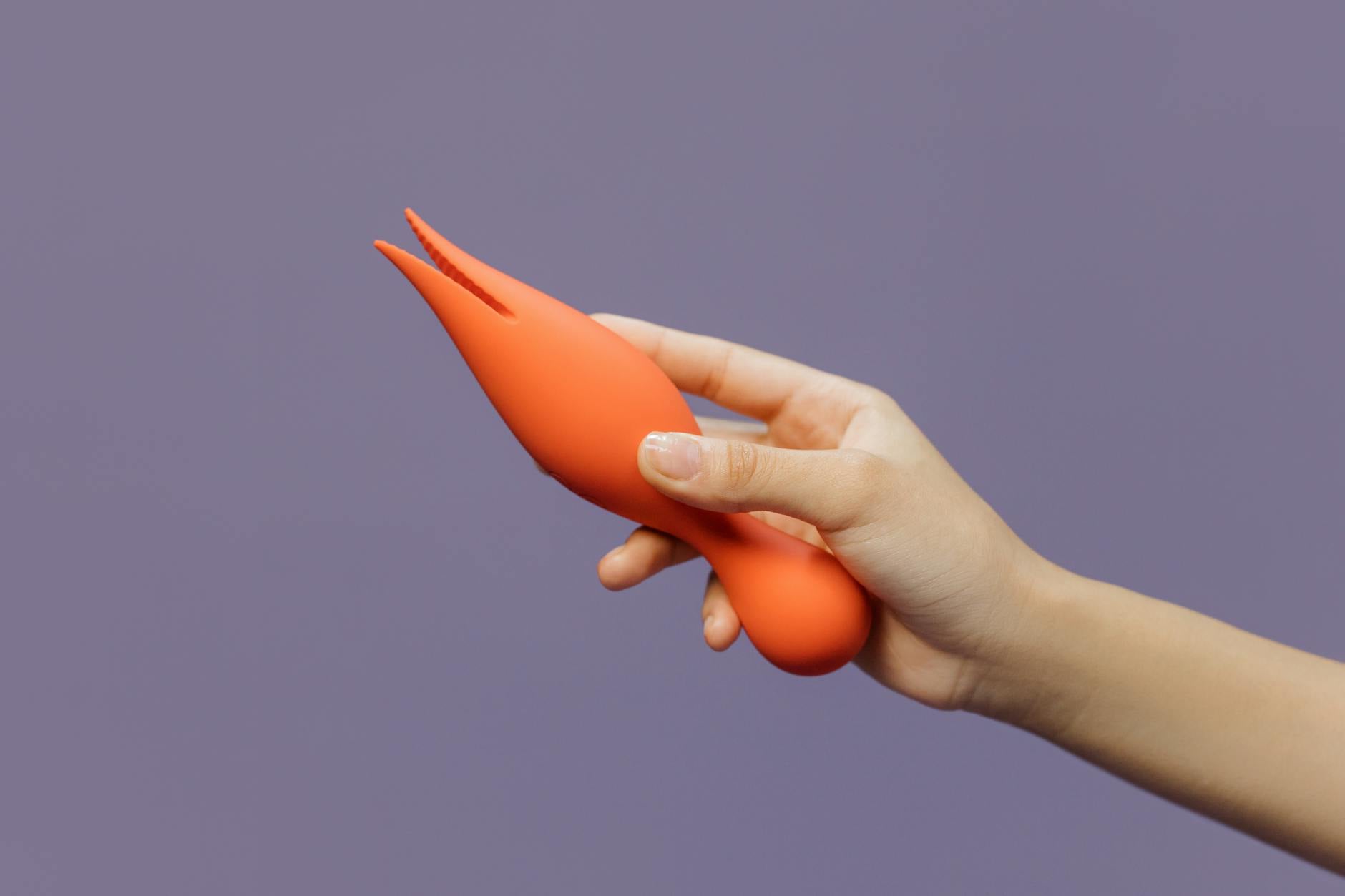
A clitoral vibrator like the Lemon is designed to work with tissue that's been less stimulated. Unlike your hand or a partner, a vibrator provides consistent, steady stimulation that doesn't require you to do much of anything except show up. You don't have to think about pressure or rhythm. You just have to breathe and receive.
The suction design of a lemon vibrator is particularly useful when you're coming back to pleasure. It stimulates without requiring direct contact on tissue that might feel tender or oversensitive. You can start on the lower settings and let the sensation rebuild gradually.
I often recommend lemon vibrators to my clients in this exact position because they lower the performance pressure. You can't "do it wrong." There's nothing to prove. It's just you and a tool that's designed to feel good.
Start with the smallest intention
Don't set yourself up for "I'm going to have an amazing orgasm." That's setting the bar too high for a comeback. Instead, aim for this: "I'm going to let myself feel something." That's it.
Carve out maybe 15 minutes. Not an hour. Not the time when you're most tired. Pick a time when you can actually relax without rushing. This matters more than you think. If you're half-watching the clock, your nervous system knows, and that's a barrier.
Start with your clothes on if that feels better. Some people need to feel safe in layers before they can relax. Touch your body over your clothes, pay attention to what feels neutral or good. There's no rush. This is reconnaissance. You're checking in with yourself, not performing.
How to actually use the lemon for the first time back
When you're ready to bring the vibrator in, start with settings one or two. Not because you want to build up gradually to something bigger, but because lower settings give your nervous system time to register sensation without overwhelming it.
Place the vibrator near your clitoris, not directly on it. The design of a lemon vibrator means you can use it from above, from the side, just near the area without direct pressure. Let it sit there for a few seconds. Get used to the sensation. Breathe.
Your job is not to chase an orgasm. Your job is to notice what you're feeling. Is it pleasant? Numb? Uncomfortable? All of those answers are fine. You're gathering information about your own body.
If it feels good, stay with it. If you want to adjust, adjust. If you want to stop, stop. There is no wrong move here. The goal is to send your nervous system a signal: "This is safe. This is for me. I'm allowed to feel good."
Managing expectations on the orgasm front
Here's the thing I tell my clients: The first time back, you might not orgasm. You might get close. You might feel a flutter of something you forgot you could feel. You might just feel... present in your body, which after a long absence is actually profound.
If orgasm doesn't happen, that's not failure. That's your body telling you it needs more time to trust that this is happening. Keep showing up. Three, four, five times might pass before something releases. That's completely normal and completely fine.
When orgasm does return, it often feels different than you remember. Sometimes gentler. Sometimes more localized. Sometimes weird for five seconds before you settle into it. That's not wrong. That's just how your particular nervous system re-learns the pattern.
Build a micro-ritual around it
One of the most powerful things you can do is make this a real appointment with yourself. Not spontaneous. Not "oh I have 10 minutes." A designated time that your body comes to expect.
Maybe it's Sunday morning before anyone else is awake. Maybe it's Wednesday evening after dinner. Same time, same place if possible. Light a candle, play music you like, do something that signals to your nervous system that this is intentional and safe.
Your brain learns through repetition. After a few times, just preparing the space will start to prime your body for pleasure. That's not small. That's biology working in your favor.
When to get support
If weeks pass and everything still feels completely numb, or if you're noticing physical pain, talk to someone. A gynecologist can rule out things like hormonal shifts or medical causes. A therapist can help if the barrier is psychological, which it often is after trauma, grief, or relationship rupture.
But most people who come back to pleasure after a long gap find that the barrier softens pretty quickly once they give themselves permission and the right conditions. A lemon vibrator is a tool for that. Permission is everything.
The bigger picture
Coming back to pleasure after a long absence isn't about jumping back to where you were. It's about meeting yourself where you are now. Your body has changed. Your needs might have changed. What turns you on might have shifted. That's not loss. That's growth.
I've worked with countless clients who found that their second act with pleasure was actually richer than the first, because it came with more self-knowledge, less shame, and a clear sense that this was for them.
Your pleasure matters. The fact that you're thinking about reclaiming it matters. Take your time. There's nowhere to rush to.
People Also Ask
How long does it usually take to feel pleasure again after a long break?
There's no standard timeline, but most people notice something shifting within the first 2-3 weeks of consistent, gentle exploration. Orgasm might take longer. Arousal might take longer. That's okay. You're not on anyone's schedule but your own. Some people feel reconnected in days. Others take months. Both are normal.
Is it normal to feel numb when using a lemon vibrator after not having pleasure for a while?
Completely normal. Numbness is actually a protective response from your nervous system. It's not a sign that anything is broken. It means your body learned not to feel as a way to protect you. Consistent, low-pressure exploration helps rewire that. The Lemon's gentle suction design is particularly good for this because it doesn't feel intrusive.
Can a lemon clitoral vibrator help if mental blocks are stopping me from enjoying pleasure?
Partially. A vibrator can bypass some of the mental friction by doing the work for you. You don't have to think about technique or performance. But if the mental block is deep, like past trauma or significant relationship pain, pairing the vibrator with some therapy support helps a lot. The tool works best when your nervous system also feels safe.
Should I use lube with a lemon vibrator if my sensitivity is low?
You don't need to, because of how the suction design works. But some people find that a tiny bit of water-based lubricant helps the sensation feel more pleasant, especially if their tissue is dry. Experiment. What feels good is what's right.
What if I orgasm very quickly after time away and feel embarrassed?
Don't. Your body has been waiting. It's celebrating. Quick orgasm after a long absence is actually a good sign that your nervous system is waking up and responding. Next time might take longer. That's how bodies work. No judgment.
How do I know if I need professional help versus just giving it more time?
Give yourself at least 4-6 weeks of consistent, gentle exploration before deciding something is wrong. If after that point pleasure still feels completely inaccessible, pain appears, or you're noticing other shifts in your body (sleep changes, mood, energy), check in with your doctor. They can rule out hormonal or physical factors. A therapist is also worth it if there's trauma or grief driving the shutdown.