Let's name what's happening
You're touching yourself and it feels like you're watching someone else do it. Or maybe sensation is technically there, but it's muted, distant, filtered through a wall of fog. That's pleasure dissociation. It's not a character flaw. It's not permanent. And it's wildly more common than anyone admits.
Disconnection from your own pleasure can show up after years of prioritizing a partner's satisfaction, after trauma, after burnout, or sometimes just because your nervous system decided to check out for a while. The body numbs what feels unsafe or overwhelming. It's a survival mechanism. But survival mode isn't a place you have to live forever.
Why dissociation blocks sensation
When you're dissociated, your brain is literally protecting itself by dampening signal transmission. It's not that your body stopped working. Your nervous system is routing around the feeling. The nerve endings are fine. The clitoris has roughly 8,000 nerve fibers. They're still there. But your brain isn't letting them through to consciousness the way they normally would.
This is why generic vibrators often don't help. A standard vibrator asks your nervous system to feel pleasure the same way it always has. But if your system is actively preventing that signal, a stronger buzz won't fix it. It's like turning up the volume on a radio station you've mentally muted.
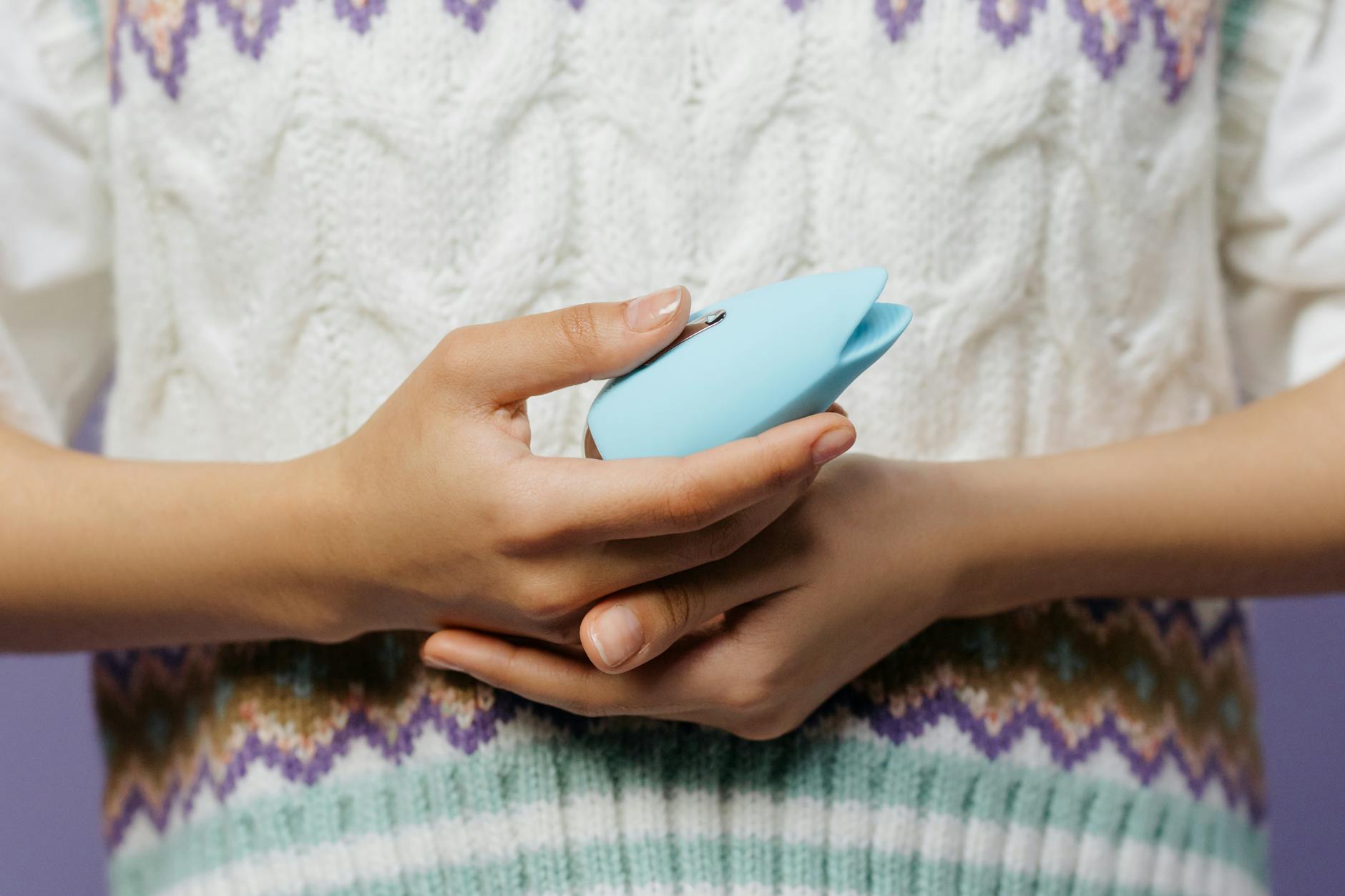
A lemon clitoral vibrator works differently. The suction mechanism activates nerves through a gentler, non-repetitive pattern that bypasses some of the brain's protective filtering. It's not drilling the nerve. It's gently opening a conversation with it.
The physiology of reconnection
Three things happen when you use a lemon vibrator if you're experiencing dissociation.
First, the air-suction pattern creates micro-sensations that are harder to ignore than vibration alone. Your nervous system can numb a buzz. It's harder to numb a gentle, rhythmic pressure that feels almost like a mouth. The sensation registers differently in your brain's sensory cortex.
Second, the suction pattern naturally encourages blood flow to the clitoris. Increased blood flow means increased sensitivity. You're not just activating existing nerves. You're waking them up gradually. This takes time. Weeks, sometimes. But the effect is cumulative.
Third, because a lemon vibrator doesn't demand the same kind of arousal that penetration does, you can start using it when you're barely aroused. You don't have to wait for desire to appear first. You can use sensation to coax desire forward instead. This flips the order and often unlocks something.

Photo by FounderTips on Pexels
How to actually start if everything feels numb
Don't begin with the goal of orgasm. That's the lie that breaks everything. You'll just be chasing a feeling that isn't there yet, and your brain will shut down faster.
Instead, use a lemon clitoral vibrator as a gentle nervous system exploration tool. Here's the framework.
Start on the lowest setting. Not because you're scared of intensity, but because low intensity is actually more likely to be felt. High intensity can cause your brain to flip the dissociation switch harder, like it's blocking out noise.
Spend 10 minutes on sensation only. That means you're touching yourself with the lemon vibrator, but you're not waiting for pleasure. You're just noticing what you notice. Is it warm? Cool? Tingly? Numb in some spots and alive in others? Notice variation, not intensity.
Do this three times a week for two weeks. Not daily. Your nervous system needs recovery time. When you're rebuilding sensation, less is genuinely more.
After two weeks, extend to 15 minutes. Still no orgasm goal. Still lowest setting. But now you're also noticing if the numbness is slightly less. Often it is. Almost imperceptibly.
If you notice even a tiny shift, that's your signal to keep going. Your nervous system is rerouting. Don't push. Let it happen at its own pace.
The mindset piece that actually matters
There's research showing that attention and self-compassion literally rewire how your brain processes sensation. If you're using a lemon vibrator while berating yourself for being numb, you're fighting your own nervous system.
The reframe: you're not broken. You're recalibrating. Your body is doing exactly what it was designed to do. Now you're helping it remember that pleasure is safe again.
Many people find it helps to name what disconnected them. Sometimes that's "I stopped prioritizing myself." Sometimes it's "I've been in survival mode for three years." Sometimes it's just "I don't know." Naming it doesn't fix it, but it tells your nervous system you're aware of the disconnect. That awareness helps.
When you use a lemon clitoral vibrator in this framework, you're not performing pleasure. You're not trying to feel something you don't. You're literally rewiring your nervous system's ability to feel. That takes patience. But it works.
When pleasure starts coming back
For some people, sensation returns within a few weeks. For others, it takes a few months. Both are completely normal.
When you start feeling something again, the temptation is to push. To extend sessions longer. To go harder. Don't. You're not trying to reach orgasm yet. You're trying to stabilize reconnection. An orgasm right now, if it's available, is a bonus. Not the goal.
Keep the sessions short and consistent. Move to medium settings only after at least a month of low-setting practice. Let pleasure rebuild gradually. A reconnection that happens slowly tends to stay stable. A forced reconnection often triggers the dissociation reflex again.
If you have a partner, this is where communication about what you're doing becomes the connective tissue. "I'm rebuilding my own sensation right now" is a complete sentence. You don't owe anyone access to this process.
The role of lemon vibrators specifically
Why a lemon sucker over a standard vibrator? The suction mechanism creates a sensory experience that's qualitatively different. Standard vibrators work through rapid oscillation. That activates one type of nerve ending: Pacinian corpuscles, which respond to vibration.
Suction activates a different pathway: sustained pressure and gentle rhythm, which activate Merkel cells and Meissner's corpuscles. When your dissociation has basically trained your brain to ignore vibration, suction can slip past that filter.
A lemon vibrator also has a natural rhythm. It's not endless. It's pulsing. This rhythm actually helps your nervous system feel safer. It's not relentless. It has a beat. Your body can sync with it rather than brace against it.
When you need more support
If after two months of consistent practice with a lemon clitoral vibrator you're still feeling completely numb, that's worth talking to a therapist about. Not because something is wrong with you. But because dissociation often has a root cause that's worth understanding.
Sometimes it's stored trauma. Sometimes it's unresolved relationship dynamics. Sometimes it's depression or chronic stress. A good therapist can help you identify which, and address it alongside the physical reconnection work you're already doing.
A lemon vibrator is a powerful tool for rebuilding sensation. But it works best alongside the emotional and relational awareness that addresses why you disconnected in the first place.
The timeline is yours
Between you and me, reconnecting with pleasure is one of the most hopeful things you can do. It says to yourself: I matter. My sensation matters. I'm worth the slow, patient work of coming back to myself.
That's not small. And it doesn't happen overnight. But with consistent, gentle practice and a lemon clitoral vibrator designed for subtle sensation, most people find their way back. The numbness lifts. Sensation returns. And pleasure, eventually, becomes real again.
FAQ: Reconnecting With Pleasure Using a Lemon Vibrator
How long does it usually take to feel sensation again with a lemon clitoral vibrator?
For most people, slight changes in sensation appear within 3 to 4 weeks of consistent use. Full reconnection typically takes 6 to 8 weeks. Individual timelines vary based on how long you've been dissociated and the root causes. Patience is the main variable. Your nervous system will recalibrate, but it does so on its own schedule, not yours.
Can I use a lemon sucker if I'm also on antidepressants that numb sensation?
Yes, and in fact, the approach is similar. If your numbness is medication-related, a lemon vibrator's suction mechanism can still activate sensation more effectively than standard vibration. That said, work with your doctor about whether your medication timing or dosage is optimized. Sometimes a small adjustment helps. A lemon clitoral vibrator isn't a replacement for that conversation, but it complements it well.
Is it normal to feel more numb the first time I use a lemon vibrator?
Yes, sometimes. When you're dissociated, your nervous system is actively preventing sensation. The first few uses can feel like nothing because your brain is saying "not safe yet." Keep using it. Over a few weeks, your system learns that this particular sensation is gentle and repeatable. Then the filtering begins to ease.
What if I can't reach orgasm even after reconnecting with sensation?
Reconnection and orgasm are different milestones. Some people regain sensation long before they're ready for orgasm. That's fine. Orgasm isn't the finish line. Sensation that feels good is. Once you're consistently feeling pleasure without numbness, orgasm often follows naturally. But if it doesn't, you've still won. You've reconnected with yourself.
Should I tell my partner I'm using a lemon vibrator to rebuild sensation?
That depends on your relationship and comfort level. If you have a partner, many people find that being honest about the work you're doing actually strengthens intimacy. It shows vulnerability. It invites understanding. But you're not obligated to. This work is for you first.
Can dissociation from pleasure come back after I've reconnected?
It can, but usually not as strongly. Reconnection creates a neural pathway your brain remembers. If you get stressed or traumatized again, your system might dampen sensation temporarily. But the pathway is there. Reconnection is usually faster the second time. You've already taught your nervous system it's possible.