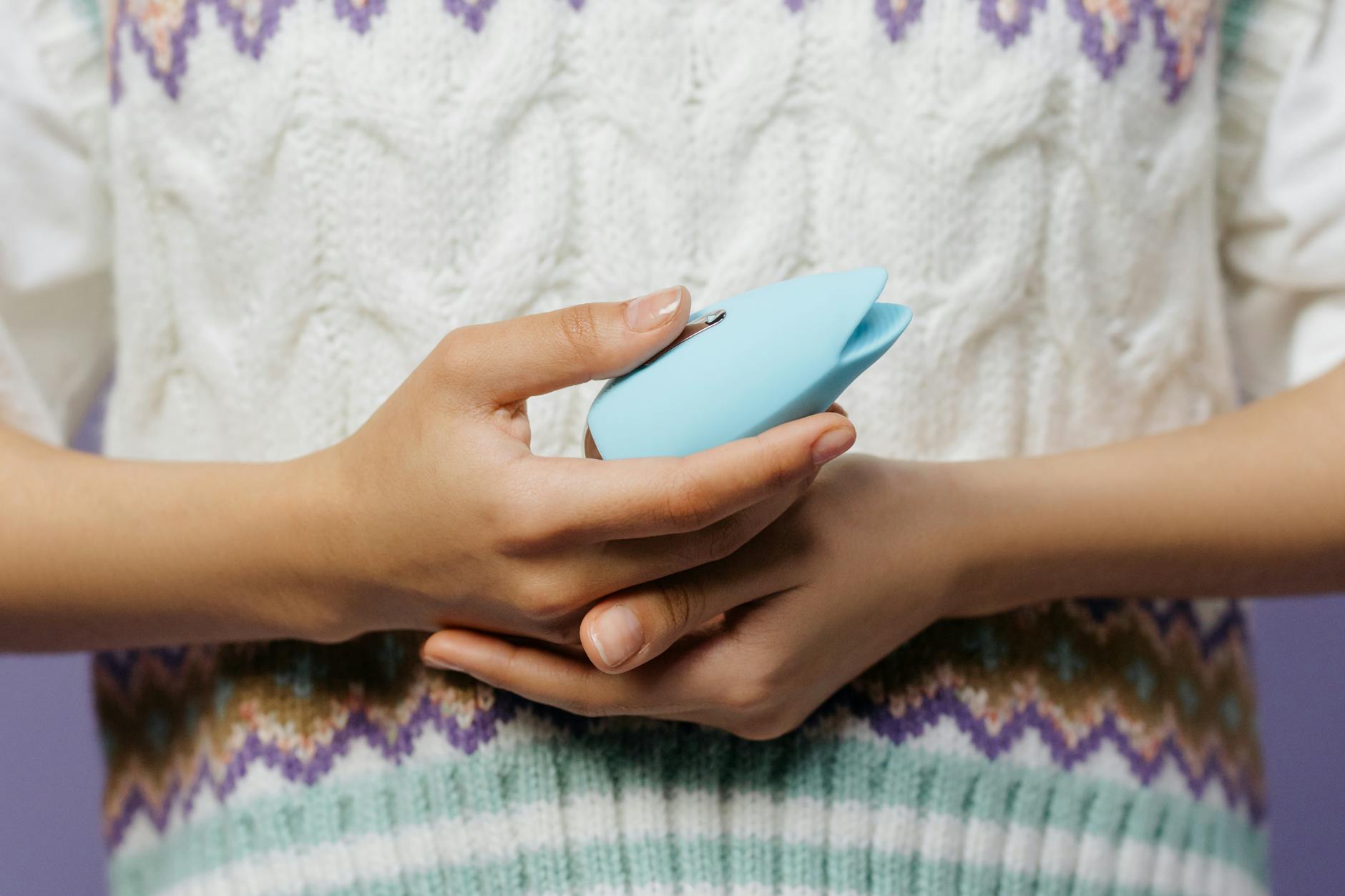
When sex becomes a checkbox
Here's what I hear most often in my practice from people who have spent years (sometimes decades) in the duty cycle: "I don't even know what I want anymore. I stopped asking myself that question so long ago that it feels foreign now."
Obligatory sex has a particular texture. It's not about saying no. It's about your body being present while your mind goes somewhere else. It's the slow erosion of desire until you can't remember what wanting felt like. And then one day you realize you've been performing a version of yourself that has nothing to do with pleasure.
If that's been your experience, a lemon vibrator isn't a quick fix. It's a portal back to your own body. But you have to know how to use it.
Why obligation kills desire at the root
Obligatory sex operates differently than other things that dull pleasure. It's not about pain, or medication side effects, or hormonal shifts (though it can coexist with all of those). It's about psychological depletion.
When sex becomes something you do for someone else, your nervous system learns to contract rather than open. You get good at finishing quickly. You train yourself to skip foreplay. Your body stops signaling what it actually wants because what it wants doesn't matter. Over time, that disconnection becomes so automatic that you can't flip it back on just because the circumstances change.
Your desire didn't vanish. It went underground.
The first step: solo exploration without an audience
This matters enough to say plainly: if you're going to rebuild pleasure after years of obligation, you need time alone with your body first.
Not sexy time. Just you and a lemon vibrator in a space where no one is waiting for an outcome. No partner in the next room. No sense of urgency. The goal isn't an orgasm. The goal is reacquaintance.
Start with your vibrator off. Hold it. Notice the weight, the temperature, the texture. Run it along your inner arm, your neck, your collarbone. Let your body remember that touch can be about sensation, not performance. This sounds basic, but it's essential. You're teaching your nervous system that pleasure exists independent of someone else's experience.
When you're ready, turn on the lowest setting. Most lemon vibrators have 3-5 intensity levels. Stay at level 1 or 2. Move it slowly. There's no rush. You're not trying to come. You're trying to feel.
Distinguishing between arousal and obligation
After years of obligatory sex, many people lose the ability to feel the difference between genuine arousal and the automatic response of their body showing up. You might feel physical sensations and assume that means you're turned on. Sometimes that's true. Sometimes your body is just responding to stimulation while your mind is still somewhere else.
Here's what real arousal feels like: there's a quality of wanting more. Your thoughts quiet. Your attention narrows. You're not monitoring or performing. You're not thinking about the next thing on your to-do list. There's a pull, a draw, an actual preference for what's happening right now.
When you're exploring with a lemon vibrator solo, pause occasionally. Ask yourself: am I enjoying this, or am I just used to pushing through? Do I want to keep going, or am I waiting for it to be over? The answers might surprise you. And they might change. Arousal isn't linear, especially not when you're rebuilding it.
Setting boundaries that protect your reclamation
This is where many people stumble. They start using a clitoral vibrator solo, feel something shift, and then immediately bring it back into couple sex. That's understandable. But it can trap you in the same dynamic you're trying to escape.
If you share a bed or a home with a partner, you may need to explicitly protect your solo time. That means actual boundaries. Not "I'll use it when they're asleep," but "This is my time for my pleasure, separate from ours." That boundary matters because it tells your nervous system that this experience belongs to you. That you matter. That your pleasure is not a subplot in someone else's story.
When you're ready to integrate a lemon vibrator into partnered sex, that's a different conversation and a different dynamic. But don't rush there. The reclamation has to come first.
How sensation builds over time
Most people who've been in the obligation cycle report that pleasure doesn't come back all at once. It builds. Your body remembers how to respond, but it takes time.
Week one or two, you might feel mostly physical sensation. That's fine. Week three, you might notice your mind is less busy during exploration. That's progress. By week four or five, some people report genuine arousal, wanting to extend sessions, trying different patterns.
This timeline varies wildly. Some people reconnect with pleasure in two weeks. Others take two months. Neither is wrong. Your body is learning that it's safe to want things again. That takes time.
With a lemon vibrator, you can experiment with different patterns and intensities to figure out what actually feels good to you, independent of what you think should feel good. The suction-based design of most lemon clitoral vibrators means you can explore sensation without the intense friction of traditional vibrators, which many people find overwhelming when they're just starting to reconnect.
What changes when you bring a partner into the picture
Once you've spent real time alone with your body and a vibrator, introducing your partner becomes a completely different conversation.
Honestly, you might find you don't want to. You might discover that you prefer using a lemon vibrator solo, and you want your partnered sex to be separate. That's valid. Many people in long-term relationships maintain that boundary for years.
Or you might want to integrate it, but on your terms. That means deciding in advance what you want. Not what you think he wants, not what seems practical, but what would actually feel good to you. If the answer is "I want to use this while we're together, but I want you to focus on me, not on your own pleasure," then that's what you ask for. If the answer is "I want this to be entirely separate from our sex," then that's the boundary.
The key difference: you're choosing. You're not defaulting. You're not obliging.
When resistance shows up
Many people who've spent years in the obligation cycle hit a wall where they start using a vibrator solo and then... stop. Resistance. It can feel like laziness, but it's usually not. It's often guilt (I should want this with my partner), or shame (what does it mean that I prefer this alone), or anxiety (if I show them I can have pleasure on my own, what happens to our relationship).
Those feelings make sense. You're fundamentally changing the narrative you've been living in. Of course that creates friction.
When resistance shows up, don't push through it. Get curious about it instead. What specifically feels hard? Is it the time? The vulnerability? The fear of what your partner might think? The sadness underneath, knowing you've lost this much time to obligation? Different resistances need different approaches, but they all need acknowledgment.
Building a new relationship with desire
Reclaiming pleasure after obligation isn't just about orgasms or sensation. It's about rebuilding a basic permission structure in your nervous system. The permission to want. To take time for yourself. To prioritize what feels good to you. To say no to things you don't actually want.
A lemon vibrator is a tool for that, but it's not the whole story. The real work is internal. It's learning to trust your own signals again. To believe that your pleasure matters. To stop apologizing for taking up space.
That takes time. Be patient with yourself.
People also ask
How long does it usually take to feel pleasure again after years of obligatory sex?
There's no universal timeline, but most people report noticeable shifts within 4-8 weeks of consistent solo exploration. Some feel something sooner. Others need months. The key is consistency and zero pressure around outcomes. You're not trying to orgasm on a schedule. You're retraining your nervous system to recognize and respond to genuine desire.
Is it normal to feel guilty using a vibrator when I have a partner?
Completely normal, and it usually points to the obligation pattern itself. You've been trained to prioritize someone else's feelings over your own body. Using a vibrator solo can trigger that guilt because it's an act of radical self-prioritization. That guilt is a signal worth exploring, not a reason to stop. Pleasure doesn't have to be shared to be legitimate.
Should I tell my partner that I'm using a lemon vibrator on my own?
That depends on the relationship and what you want. There's no universal answer. Some people benefit from transparency early. Others prefer to reconnect with their own pleasure privately first, then decide whether or how to involve their partner. What matters is that you're choosing based on what feels right to you, not on obligation or fear.
What if my partner feels threatened by my using a vibrator solo?
His feelings about your pleasure are important context, but they're not your responsibility to manage. If using a vibrator triggers insecurity in him, that's about his own relationship with desire, adequacy, or vulnerability. Those are valid things to work through, probably with a couples therapist. But they're not reasons to deny yourself reclamation.
Can a lemon vibrator help me distinguish between real arousal and just physical response?
Yes, because a lemon vibrator's suction-based design creates a different quality of sensation than traditional vibrators. Many people find that the distinctiveness of the sensation makes it easier to notice when they're genuinely present versus when they're performing. The pattern and intensity changes also give you more granular control over building arousal slowly, which helps you feel the difference between obligation and genuine want.
What if I feel numb even when I'm exploring solo with a vibrator?
Numbness is common early on, especially if you've spent years disconnected from your body. Don't panic. It usually shifts with time and without pressure. Some people find that starting with very low intensity helps. Others find that longer, slower sessions work better than trying to reach intensity quickly. If numbness persists beyond two months, that might point to medication side effects or other physiological factors worth exploring with a healthcare provider. But in most cases, reconnection just takes patience.