Here's what nobody tells you
Pleasure and intimacy are not the same thing. You can feel deeply intimate with someone and have zero sexual spark. You can feel sexually charged with someone and sense no real connection. Most of us assume these two experiences should arrive together—that good sex lives in the overlap. When they separate, we treat it like a problem to solve. Sometimes it is. Sometimes it's just the reality of how bodies and hearts work.
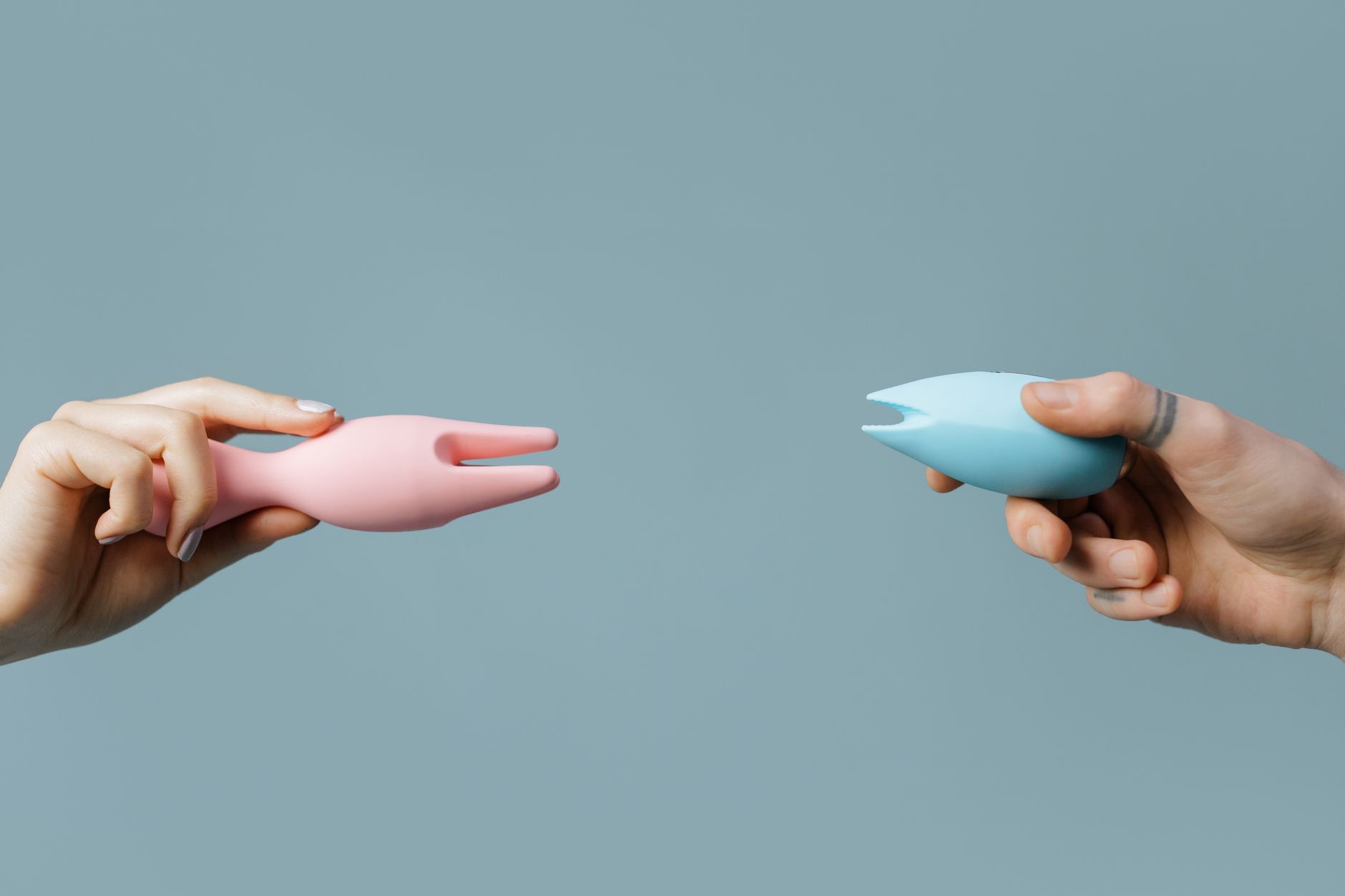
The disconnect often shows up the same way: you're physically attracted to your partner, you care about them, and the moment you enter the bedroom (or the couch, or anywhere intimate), it's like you're watching yourself from three feet away. Your body doesn't respond the way it used to. Your mind stays half outside the experience. A lemon vibrator—specifically a clitoral vibrator like Lem—can help you rebuild that bridge, but only if you use it with intention, not as a workaround.
I've worked with hundreds of people navigating this exact separation. The good news is that it's fixable. The better news is that the fix usually involves understanding why the disconnect happened in the first place.
Why pleasure and intimacy drift apart
There are maybe five common patterns.
The trust erosion. A betrayal, a breach of privacy, a series of small unkindnesses. Your body has long-term memory, even when your mind wants to move forward. Arousal requires feeling safe, and safety is built from thousands of tiny interactions over months or years. When that's damaged, your nervous system will protect you by keeping arousal at a distance.
The presence crisis. You're with your partner, but you're scrolling through your phone in your head. Work stress, family obligations, financial anxiety. Your body is physically capable of pleasure, but your mind is somewhere else. Intimacy requires presence, and presence requires bandwidth. When you're running on fumes, intimacy becomes another task on the list.
The resentment layer. You love your partner. You don't like them right now. Maybe they've withdrawn emotionally, or you feel unseen in the relationship, or the division of household labor has calcified into something that feels unfair. Resentment doesn't kill desire overnight—it calcifies it. Over months or years, physical attraction starts to feel like an obligation instead of a draw.
The mismatched rhythm. One of you is ready for sex and the other has been mentally prepping for bed. One of you wants spontaneity and the other needs a clear signal. One of you is in a different life season—stressed about work, dealing with health changes, grieving something. You're moving at different speeds, and the disconnect feels less like a relationship problem and more like you're just out of sync.
The identity shift. Something changed about how you see yourself. You became a parent, you went through a significant health change, you had a realization about what you actually want. Your partner didn't change—you did. That's not a betrayal or a failure. It's a signal that your body is trying to tell you something about what intimacy means now.
What a lemon clitoral vibrator actually does here
This matters because a vibrator isn't a magic wand that reconnects you to your partner. What it does is reconnect you to yourself.
When pleasure has drifted away from intimacy, your nervous system has usually learned to shut down arousal before it fully arrives. A vibrator like Lem—with its suction-based stimulation—retrains that response. It gives you a pathway to physical pleasure that doesn't require emotional presence in the same way. That might sound cold, but it's actually the point.
Here's the sequence: you use a clitoral vibrator on your own. You practice feeling sensation without judgment. Your nervous system starts to recognize that arousal is safe, that pleasure isn't conditional. Your body remembers what full arousal feels like. Then, when you move back into partnered intimacy, you have a reference point. You know what to ask for. You know what your body is capable of. You're not starting from zero.
This is different from just using a toy during sex with your partner, which is a valid thing to do but solves a different problem. This is about solo reconstruction.
The actual practice
Set aside time weekly—not pressured time, but intentional time. Maybe Sunday morning, maybe Tuesday evening. Something regular but not so frequent that it feels clinical.
Start without the vibrator. This sounds obvious but most people skip it. Spend ten to fifteen minutes just noticing sensation. Touch your body the way you'd touch something you're curious about, not something you're trying to fix. Your forearms, your collarbone, your inner thighs. Notice where you're numb and where you're responsive. Don't try to feel aroused. Just feel.
Then introduce the vibrator. Start at a lower intensity. The Lem's suction-based design means you're stimulating nerves without the pressure that sometimes overwhelms reconnected nervous systems. Move slowly around your clitoris. Notice the difference between the edge of arousal and full arousal. See how long you can stay in the middle without pushing toward orgasm.
This is crucial: you're not goal-tracking toward an orgasm. That reintroduces the same performance pressure that disconnected you from pleasure in the first place. You're rebuilding a felt sense of pleasure. Sometimes that culminates in orgasm. Sometimes it stops at deep arousal. Both are full experiences.
The intimacy piece happens separately
Once you've spent a few weeks rebuilding your own pathway to pleasure, the conversation with your partner changes. You're not saying "I need you to fix this." You're saying "I've realized something about what my body needs, and I want to explore that together."
If the disconnect came from trust erosion or resentment, this is also when those conversations need to happen—not during sex, not in the moment. When pleasure feels rushed or pressured by a partner, it's usually because the underlying relationship conversation never happened. A vibrator can't fix that. Honest conversation can.
Bring the lemon vibrator into partnered sex if it feels right—but do it because you want to explore sensation together, not because you're trying to manufacture the missing intimacy. There's a huge difference between "I'd like to use this because it helps me feel more present" and "I need this because you can't turn me on anymore." The first is collaborative. The second is a band-aid.
When to get outside help
If the disconnect is rooted in trust erosion or a significant betrayal, a vibrator is not the solution. Neither is time. A couples therapist is. Trust rebuilds through specific actions and conversations, not spontaneously.
If the disconnect is tied to depression, anxiety, or ADHD, a healthcare provider matters more than a toy. Sexual dysfunction is often a symptom of something else. Treating the symptom without addressing the root is like taking pain medication for a broken bone without setting it.
If you and your partner are in completely different places about what intimacy means or whether you want it, that's a fundamental compatibility conversation. A lemon vibrator won't bridge that gap.
But if this is about reconnection after time has passed, or reclaiming your own pleasure after life got in the way, or rebuilding sensation after your body changed—yes. A clitoral vibrator is useful. Your body has neural pathways, and those pathways respond to practice.
The permission piece
Most people who experience a disconnect between pleasure and intimacy internalize shame about it. You assume your body is broken, or you're broken, or the relationship is broken. Usually it's none of those things. It's just what happens when life gets complicated and bodies get quiet.
Using a lemon vibrator solo isn't giving up on partnered intimacy. It's the opposite. You're saying your pleasure matters enough to invest in it separately. You're rebuilding the foundation so that when you return to your partner, you're not asking them to do the entire job of reconnecting you to your own body. That's too much weight to put on one person.
Your body deserves to feel good. Your relationship deserves the kind of presence and desire that comes from you actually being present and desirous, not from you white-knuckling through something that feels obligatory. Rebuilding that takes time, self-knowledge, and usually a tool that helps you practice. A Lem vibrator is exactly that tool.
Common questions
Can using a vibrator alone make you less attracted to your partner?
No. The opposite is usually true. When you rebuild your own capacity for pleasure, you're less likely to resent your partner for "not turning you on." You're not putting that entire responsibility on them. You also become more present during partnered sex because you're not anxious about whether your body will cooperate.
How long does it take to feel the difference?
Some people feel it within two or three sessions. Others need four to six weeks of consistent practice. Your body has been protecting itself, so it's learning that arousal is safe again. That takes time. Consistency matters more than intensity.
Should I tell my partner I'm using a vibrator?
That depends on your relationship. If you generally share things openly, yes. If this feels like something you need privately for a bit to rebuild your own sense of what pleasure is, that's also legitimate. But eventually, this reconnection needs to inform your partnered intimacy, which means some version of the conversation needs to happen.
What if I don't have orgasms during this process?
That's actually fine. Orgasm is not the marker of success here. Presence is. Sensation is. The ability to feel arousal building and stay with it without judgment. If orgasms come, great. If they don't, you're still rebuilding.
Is the Lem vibrator specifically better for this than other toys?
For reconnection work, the suction design is genuinely useful. It's gentler than some direct-stimulation vibrators, which means it's easier to stay in the sensation without being overwhelmed. That said, any clitoral vibrator that feels good to your body will work. The tool matters less than the consistency and intention.
What if I'm embarrassed to talk about this with my partner?
That embarrassment is part of what disconnected you in the first place. The intimacy you're trying to rebuild includes the ability to talk about desire, about bodies, about what you actually need. Starting that conversation is hard. Continuing to avoid it guarantees the disconnection stays. A marriage and family coach or therapist can help you find the words if this feels too vulnerable to do alone.
Pleasure and intimacy aren't the same thing. But they can live in the same relationship. Rebuilding that connection starts with remembering that your body's capacity for pleasure is real, deserving of attention, and absolutely worth the work.