
Let's start here: this isn't about forcing pleasure back
Healing from sexual trauma isn't a linear path, and it's definitely not about rushing yourself back into sensation or performance. If you're thinking about using a lemon vibrator as part of rebuilding your relationship with your own body, that's a meaningful step. But the actual work is slower and more intentional than just turning something on and hoping it feels good.
What I've seen across years of working with clients is that a tool like a lemon clitoral vibrator works best when it's paired with patience, clear boundaries, and a specific understanding of what you're actually trying to reclaim. Not your "old" pleasure. Your current pleasure. Your choice.
Why a lemon vibrator specifically helps with this work
There's something about the suction-based design of a lemon vibrator that feels different from other clitoral toys. It's not about friction or direct pressure. It's about gentle, consistent stimulation that you control entirely. You choose the setting, you choose how long you use it, you choose when to stop. That agency matters more than you might think when you're rebuilding trust with your own body.
The lemon's air-pulse technology also means you can start at the gentlest settings without worrying that you're missing out on sensation. Pattern 1 is genuinely soothing. It's not a warm-up to "real" pleasure. It's complete pleasure on its own terms. Many clients find this distinction liberating. There's no pressure to escalate. No invisible finish line.
Second, the device itself is small enough to feel manageable. Some people recovering from trauma find that large or intimidating toys trigger an instinctive no. A lemon vibrator fits in your palm and looks almost unassuming. That's not a minor detail. If your nervous system has been in protection mode, you want tools that feel approachable, not commanding.
The permission piece (this is the hardest part)
Before you even consider turning on a lemon vibrator, you need to give yourself explicit permission to have pleasure without it leading anywhere. Not as foreplay. Not as a stepping stone to partnered sex. Not as proof that you're "healed." Just as an isolated, complete experience that belongs only to you.
This sounds obvious until you realize how many people can't actually do it. There's often a ghost narrative running underneath: "If I feel this, I'm obligated to feel more. If I let myself enjoy this, I'm saying I'm ready for something bigger. If I have this pleasure, I owe someone something."
You don't. Pleasure is yours to explore in isolation, on your timeline, with no audience and no obligation.
Write this down if you need to: "I am using this tool only for myself. This experience has no throughline to anything else. It begins and ends in this moment." Some therapists call this a grounding statement. I just call it permission that your nervous system might actually believe.
Setting up your environment (boring but essential)
Healing-focused pleasure is not the same as quickie pleasure. You're not optimizing for efficiency. You're optimizing for safety and control.
Choose a space where you feel completely private and where you won't be interrupted. A locked bedroom is obvious. Some people choose a bathroom because it feels more contained. Others prefer a time of day when they know they're absolutely alone. The specifics matter less than your actual certainty that you won't be disturbed. Interruption can trigger a defensive response, and you don't want your nervous system's reaction to become part of what you're processing.
Keep your phone nearby but turned face-down. You're not hiding anything. You're just removing the visual pull of other demands. Have water within arm's reach. Set a timer if it helps you feel safe knowing when this will end. Yes, this is practical. Yes, it's also deeply psychological. Your body needs to know it's in control of the timeline.
Wear something that feels safe. For some people that's nothing. For others it's a favorite sweater or a bathrobe that feels grounding. There's no right answer. The only criteria is that you feel present and protected, not exposed or vulnerable.
Your actual first session (and why it might not look like you expect)
Turn the lemon vibrator on at pattern 1. Not because you're building up to something else, but because that's the only step. Hold it against your inner thigh or your hip first. Not immediately on your clitoris. Let your body register sensation in a less charged area.
Your nervous system might be expecting something to happen based on past experience. Discomfort, pain, pressure, obligation. Nothing might happen. You might feel mild pleasure. You might feel nothing at all. All of these are fine. You're not gathering data on whether you're "fixed." You're gathering information about what your body can tolerate right now.
If your mind starts generating a narrative ("This doesn't feel like anything, I'm broken"; "This feels too much, I'm not ready"), gently redirect your attention back to the sensation itself, without judgment. Not by forcing yourself to feel something different, but by staying curious about what's actually there. A good therapist sometimes calls this "observing without evaluating."
Stop whenever you want. Genuinely. This isn't a challenge or a test. If you're using this tool correctly, you should feel like you can stop at any moment and you'll be completely fine. That certainty is the goal, not the side effect.
When you're ready to explore more (if and when)
Some people feel comfortable moving from pattern 1 to pattern 2 within the same session. Some people spend three months on pattern 1 and that's exactly right. There's no timeline here that isn't yours.
When you do feel ready to explore more intensity, move slowly. One setting higher. The same duration. Same everything else. You're not testing your limits. You're gradually expanding your window of tolerance. If at any point something feels activating or triggers a defensive response, you step back and return to what felt safe.
A lemon vibrator's real power in trauma recovery isn't that it produces incredible orgasms. It's that it lets you experience pleasure that's entirely self-directed, with no coercion, no stakes, and complete control over duration and intensity. That's not a small thing. That's the foundation of rebuilding trust with your own body.
When to involve a partner (or whether to at all)
If you're in a relationship and your partner knows you're working through trauma, they might ask how they can support this process. The answer is: probably not in the room. The first phase is about you rediscovering your own pleasure signals without performance pressure. That's fundamentally a solo activity.
If you eventually want to explore partnered pleasure, that's a separate conversation with a different timeline. And it requires explicit, renegotiated consent every single time. Past consent (even general consent about your body) doesn't carry forward. Each experience is new.
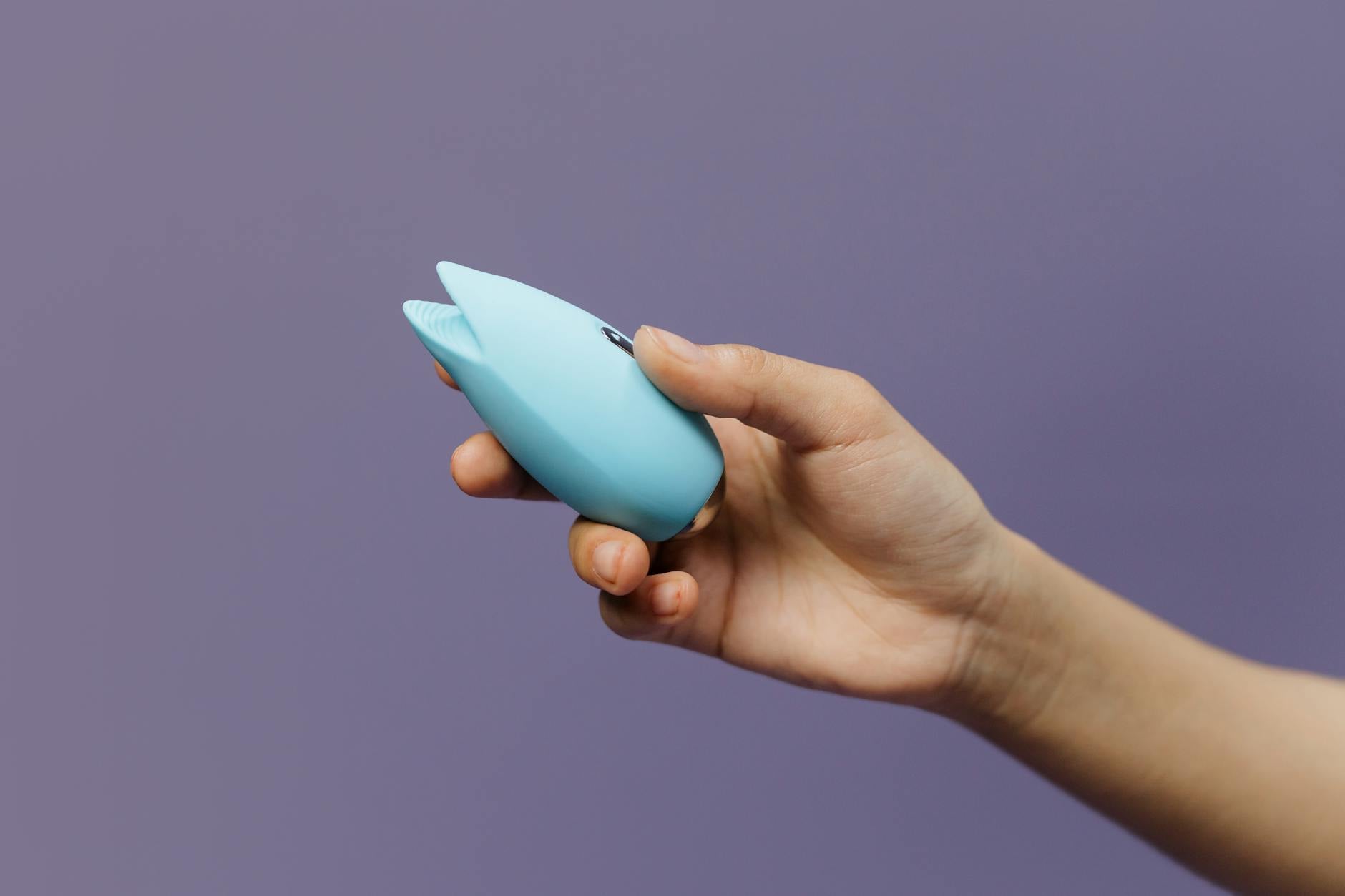
Photo by cottonbro studio on Pexels
Working with a therapist alongside this
If you're using a lemon vibrator as part of trauma recovery, you should ideally have support from a trauma-informed therapist. Not because solo exploration is wrong. Because having someone trained in nervous system healing can help you understand what sensations mean and how to work with your body's responses when they feel confusing or overwhelming.
A good therapist won't tell you what to feel or when to escalate. They'll help you understand your own signals and build confidence in your ability to make choices about your body. That's the actual healing work. The lemon vibrator is just a tool that makes certain parts of that work possible.
Consider looking for therapists trained in somatic experiencing, EMDR, or trauma-focused CBT. These approaches specifically address how trauma lives in the body and how to safely rewire nervous system responses.
FAQ
Can I use a lemon vibrator if I'm not ready for any pleasure yet?
Absolutely. Some people use it fully clothed, just to experience the sensation through fabric. Others hold it in their hand and turn it on without applying it anywhere. The point is reconnecting with the experience of choosing to engage with a tool designed for pleasure, no strings attached. That's the reclamation. The actual sensation is secondary.
What if using a lemon vibrator triggers memories or difficult emotions?
Stop immediately. This is not failure. This is your nervous system giving you information. Sit with it for a moment without judgment. You might not be ready yet, or you might need a different approach. A therapist trained in trauma can help you understand what triggered the response and whether it's something to process or a sign that this particular tool isn't right for you right now. Both are valid.
How often should I use a lemon vibrator during healing?
There's no prescription. Some people find that once a week feels grounding and sustainable. Others find daily practice helpful. What matters is that it never feels obligatory. The moment using it becomes something you "should" do, you've lost the point. It's about choice and agency, which means you can also choose not to do it.
Is it okay to use a lemon vibrator and still be working through trauma in therapy?
Yes. In fact, it's often ideal. Therapy gives you the language and understanding. A tool like a lemon vibrator gives you direct, embodied experience with your own pleasure and control. They work together. Just make sure your therapist knows you're exploring this so they can help you integrate what you're learning.
What if I feel guilty about experiencing pleasure?
That's incredibly common. Trauma often comes bundled with shame, and shame makes people feel like pleasure is something they don't deserve or something that's inherently unsafe. Work with your therapist on separating the message you internalized from the truth: your body deserves pleasure, and reclaiming that is an act of healing, not selfishness.
Can I use a lemon vibrator with a partner eventually?
Yes, but that's a separate journey with its own timeline. The solo work comes first. Once you've rebuilt your own relationship with pleasure and your nervous system feels safer, you can renegotiate what partnered exploration looks like. And you can always change your mind about that. Healing isn't linear and neither is what you want from intimacy.
The actual path forward
Healing from sexual trauma isn't about erasing what happened or forcing yourself back into sensation. It's about slowly, intentionally reclaiming your right to pleasure on your own terms. A lemon vibrator is a tool for that work, but only if you approach it with patience, clear boundaries, and honest communication with yourself about what you're actually ready for.
The fact that you're thinking about this at all suggests you're ready to begin rebuilding. That matters. Take your time. Your body will follow when it's safe.
If you're struggling with where to start, reaching out to a trauma-informed therapist is the first real step. A tool like a lemon vibrator comes after the groundwork is laid.
Sources: Research on trauma recovery and somatic approaches draws from clinical practice with trauma-informed therapy models including somatic experiencing (Levine, 2010), polyvagal theory (Porges, 2011), and trauma-focused cognitive behavioral therapy (Resick & Schnicke, 1992). Recommendations for gradual exposure and nervous system safety are consistent with modern trauma treatment protocols.