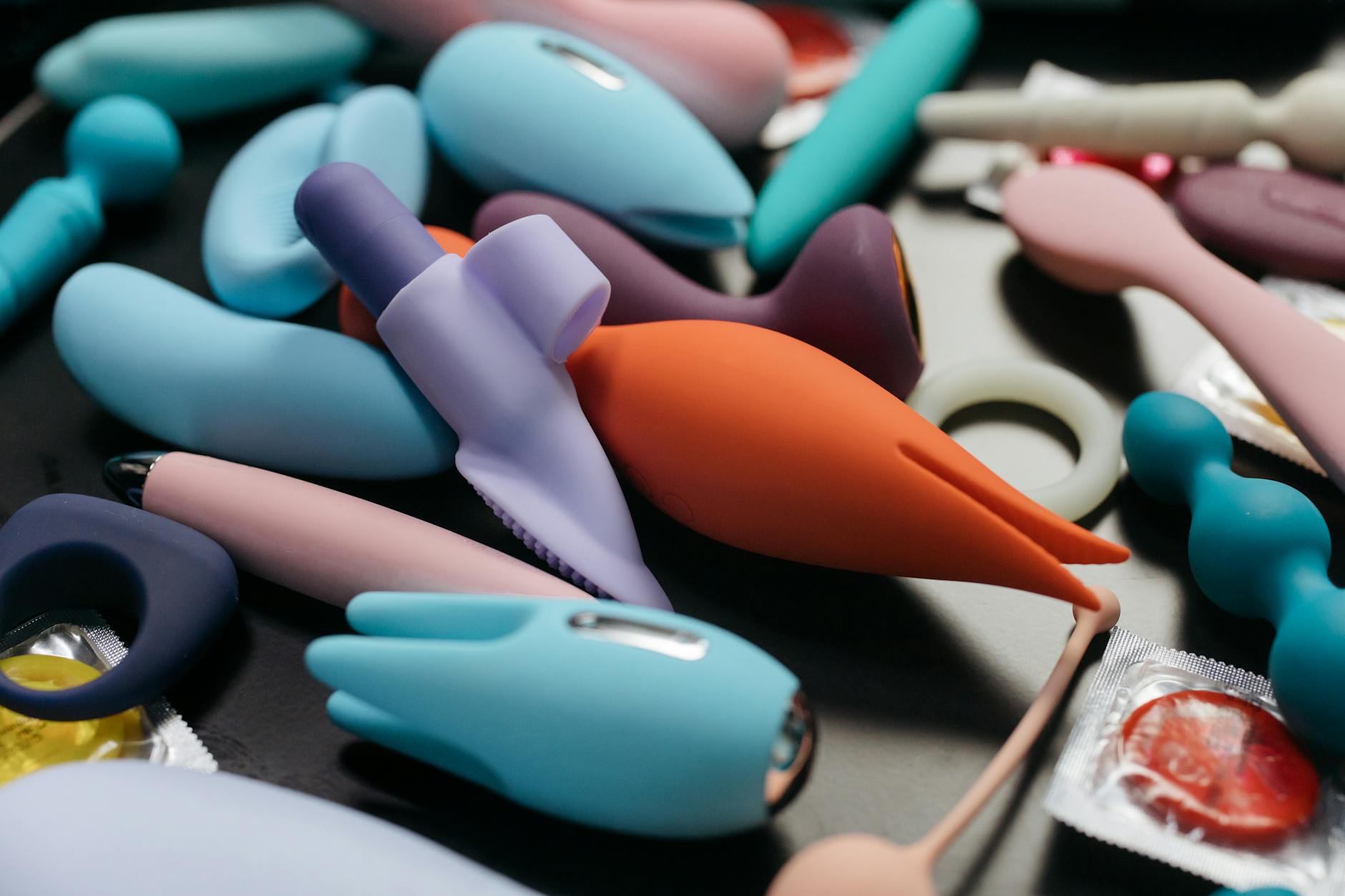
Here's what happens when your arousal timeline gets steamrolled
Your partner is ready. You're not. They kiss your neck, they're already focused on penetration or their own pleasure, and you feel the familiar panic: if you're not there yet, something's wrong with you. So you speed up. You skip your own warm-up. You perform enthusiasm you don't feel. And the sex that follows feels mechanical, obligatory, maybe even uncomfortable.
This isn't a communication problem that one conversation fixes. It's a pacing problem, and it's wildly common in long-term relationships. One person's arousal cycle runs at a different speed, and without a tool or a strategy, someone always ends up rushing.
Why partners push the timeline (and what it costs you)
Let's be honest: your partner isn't trying to hurt you. But when they're already aroused and you're still warming up, the wait feels confusing or rejecting to them. "Aren't you into this?" the silence asks. So they escalate. They speed things up. They assume you need to catch up to them, not the other way around.
For you, that pressure does the opposite of what they're hoping. Your nervous system tightens. Arousal actually takes longer. Your clitoris, which needs gradual stimulation and mental space to wake up, gets touched in ways that feel too intense or too rushed. You end up disconnected from the experience entirely.
The cost: resentment builds quietly. Sex becomes something you manage instead of something you enjoy. And over time, desire itself can flatline because the whole experience has become predictably pressured.
How a lemon vibrator solves the pacing problem
A lemon clitoral vibrator, or lemon sucker as many call them, works differently than your partner's hands. Here's why that matters.
First, it gives you control. When your partner is touching you, their pace is locked to their own arousal and intention. With a device, you literally hold the power button. You set the intensity. You decide when to intensify or back off. That autonomy alone changes your nervous system from defensive to open.
Second, it's faster than manual stimulation. The lemon vibrator's suction pattern works on the clitoral complex with precision that hands simply can't match. So when your partner wants to move forward and you need more time, the vibrator compresses that time without you having to fake readiness. You're actually building real arousal, not theater.
Third, it reframes the whole dynamic. Instead of "I'm not ready yet," the conversation becomes "I want to use this." That's not a rejection of your partner. It's a statement of what works for your body. And most partners find that genuinely hot once they understand it's not about them.
The setup that actually works
Before you're even touching, say this: "My arousal takes longer than yours, and that's just how I'm wired. I want to use a vibrator because it helps me get there faster and feel more present. That's not about you. It's about me knowing how to pleasure myself."
Most of the shame couples carry about speed mismatch comes from the unspoken idea that arousal should be automatic and synchronized. It's not. It won't be. And the sooner you both name that, the more you can work with it instead of against it.
Here's the practical flow:
Start solo or together, your choice. Some people like to warm up alone with the lemon vibrator while their partner waits or touches other parts of their body. Others want their partner right there, watching or participating. Neither is "better." Pick what feels less pressured.
Begin at pattern 1 or 2. You're not chasing the strongest setting. You're building sensation slowly. Let your clitoris wake up on its own timeline. This usually takes 5-15 minutes, not 30 seconds.
Let your partner know what's happening in your body. "This is building," or "I need this intensity for a few more minutes." That keeps them connected and removes the guessing game on their end.
Move into partnered touch once you're genuinely aroused. Now your nervous system is open, your clitoris is responsive, and you actually want what's coming next. That's the difference between obligatory sex and real pleasure.
The conversation you need to have first
Most couples skip this because vulnerability is awkward. But here's what I tell my clients: the awkwardness of talking about pleasure takes 15 minutes once. The resentment of rushed sex builds for years.
Sit down outside the bedroom. Not during sex. Not right after. Just say something like this:
"I love you and I enjoy sex with you. And I notice my body takes longer to get ready than yours does. I've been trying to speed up to match you, and it's actually making things harder for me. I want to try using a tool that helps me build arousal at my own pace. This isn't about you not being enough. It's about me taking responsibility for my own pleasure instead of expecting my body to perform on a timeline that doesn't fit."
Then listen. They might feel rejected initially. That's normal. But most partners, once they understand this makes sex more genuine and more present, actually prefer it to performative enthusiasm.
When you mention using a lemon clitoral vibrator or other lemon sexual toy, frame it as collaborative. "I'd love to explore this together," not "I need this because you're not doing it right."
Why air-suction changes the dynamic differently than vibration
If you've used vibrators before and they felt numbing or too intense, that's important. A lemon vibrator uses air-suction technology, which works by gently massaging the tissue rather than buzzing directly against it. That gentleness actually allows for longer sessions without desensitization.
For pressure situations specifically, this matters because the sensation builds gradually instead of hitting you all at once. Your arousal genuinely rises in response to the stimulation, rather than your clitoris becoming overwhelmed and shutting down.
Many people find that air-suction feels more like partnered touch than traditional vibration. It's rhythmic, responsive, almost conversational with your body. That makes it easier to stay present and connected to your partner even while using it.
When your partner still resists the idea
Some partners hear "I need a vibrator" and translate it as "You're not enough." That's their insecurity talking, not reality. Here's how to handle it:
Don't defend. Don't over-explain. Don't shrink your needs to make them comfortable.
Instead: "I understand this might feel new. But I'm asking you to trust that this is about my pleasure, not about replacing you. I want to feel good, and I want to feel good with you. This helps that happen. I hope you'll be open to exploring it."
If they remain resistant after a genuine conversation, that's worth examining. Because what you're really asking is: "Can you support my pleasure even when it looks different from what you imagined?" If the answer is no, that's information about the relationship, not about whether you should use the vibrator.
You get to prioritize your own arousal and presence. Full stop.
Building genuine arousal instead of rushing to finish
Here's what changes when you take control of your pacing with a lemon vibrator. Sex stops being a race with a finish line. It becomes an experience you're actually inhabiting.
Your partner notices this immediately. The presence is different. The responsiveness is real. They're not performing enthusiasm for someone who's pretending to be aroused. You're both actually there.
And honestly? That usually makes partnered sex better for both of you. Because you're no longer exhausted from trying to keep up. Your pleasure is actual pleasure, not theater. And when one partner is genuinely aroused, the other person's experience deepens too.
The long-term shift
After a few months of using a lemon clitoral vibrator to manage the pacing gap, something interesting happens. You start to know your own arousal better. You recognize what you need. You stop apologizing for your timeline. And your partner stops treating your speed like a problem to fix.
That's when real intimacy can happen. Not because everything's synchronized, but because you've both agreed that your pleasure, even when it's slower or different, is worth protecting.
FAQ: Pressure, pacing, and pleasure
How do I bring up using a vibrator without my partner thinking I'm rejecting them?
Frame it as self-knowledge, not criticism. "I've realized my arousal takes time, and I want to honor that instead of fighting it. Using a vibrator helps me get there without pressure, which makes me more present with you." That's radically different from "Your touch doesn't work for me." One is about your body. The other feels like judgment.
What if my partner wants to use the vibrator on me, but their touch still feels pressured?
Then you keep the control. "I appreciate that, and I'd love for you to hold me while I use this." Or "Let's try this pattern first, and then maybe you can take a turn if that feels good." You're not rejecting them. You're protecting your arousal, which actually deepens intimacy long-term.
Can using a lemon vibrator make me dependent on it for orgasm?
No. But using it regularly helps your nervous system learn what genuine arousal feels like without pressure. That actually transfers to partnered sex over time. You're teaching your body what real arousal is, not creating a dependency.
What if my partner's arousal drops because I'm using a vibrator?
That's about their insecurity, not your vibrator. You might say: "I want to stay connected. Can you kiss me or touch other parts of my body while I do this?" Most partners find watching their partner's actual pleasure incredibly hot. It's the shame or secrecy that kills arousal, not the vibrator itself.
How long should I use the vibrator before we transition to partnered sex?
Until you're genuinely aroused. That's 5-20 minutes depending on the day, your stress level, and what you've been thinking about. There's no "right" timeline. The point is that you're not rushing. You're at the place where your body actually wants more.
Is it normal that I feel guilty using a lemon vibrator while my partner watches?
Completely normal. You've probably been socialized to think pleasure should happen in sync, to his timeline, on his terms. Breaking that conditioning feels weird at first. But guilt usually fades once you notice how much better the sex actually is when you're genuinely aroused instead of performing.
Reconnecting with your own pleasure, at your own pace, is one of the most loving things you can do for your relationship. It removes the resentment. It builds real intimacy. And it reminds your partner that your arousal matters just as much as theirs.
If you're ready to explore this, start here. Then talk. Then try. Your body, your timeline, your pleasure. That's how it should work.