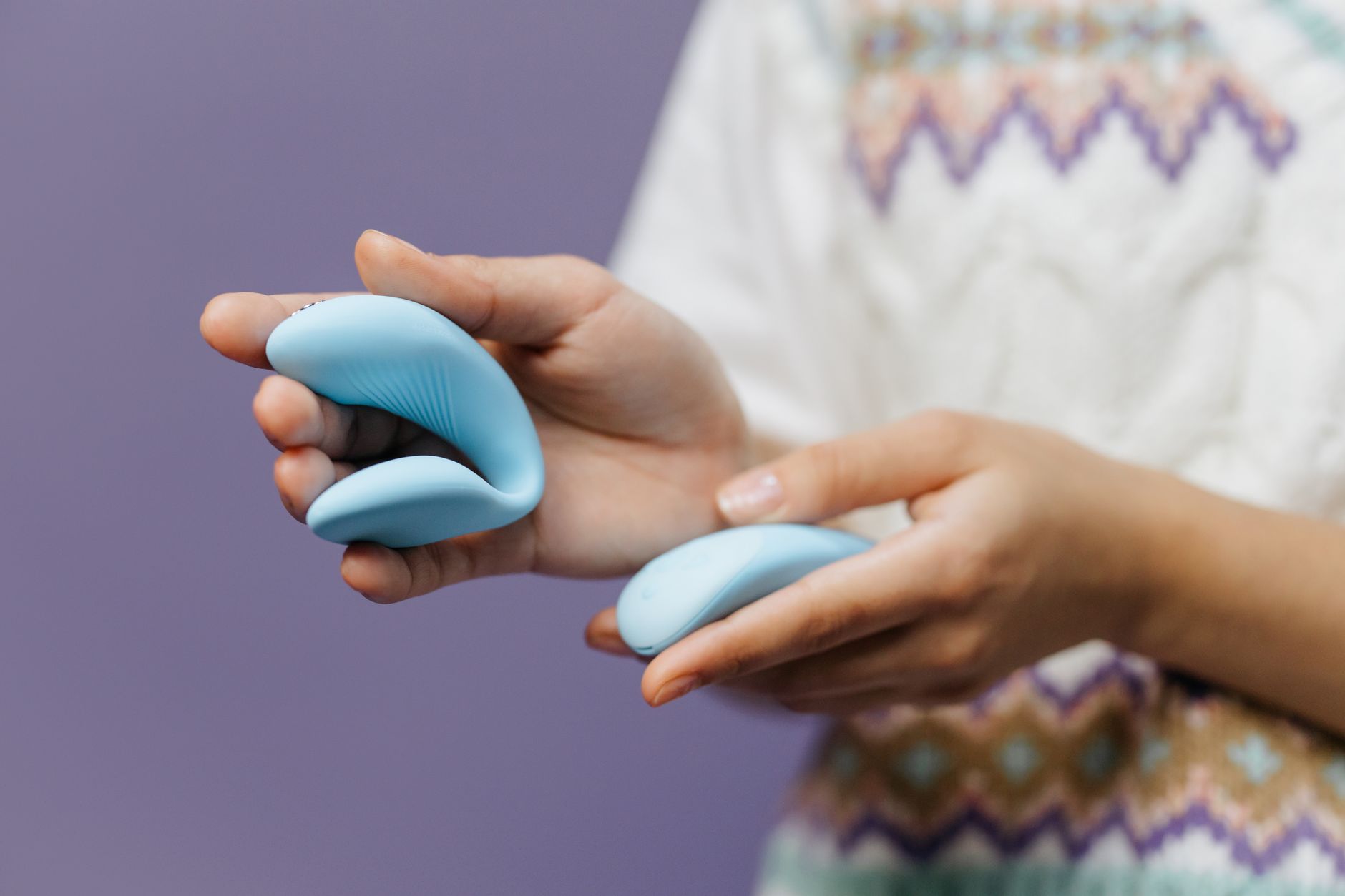
Let's be real about what changed
Arousal used to be faster. Maybe not lightning-fast, but there was a time when a few minutes of attention and your body was ready to go. Now you're looking at 20, 30, sometimes 45 minutes before things really start moving. And if you're in a relationship, that slowdown probably feels like it's creating a mismatch between your timeline and your partner's.
Here's what actually matters: this slowdown is not a failure. It's also not something you need to "fix" by powering through faster. Your body has legitimate reasons for needing more time, and once you stop fighting that reality, lemon clitoral vibrators become genuinely useful instead of just feeling like a workaround.
Why arousal got slower (and why it's not what you think)
Three things are usually happening at once. First, your nervous system takes longer to shift out of daily-life mode into arousal mode. You're not less capable of pleasure. Your brain is just busier, and it needs more runway to disengage from work emails, bills, and whatever else is sitting in your mental queue.
Second, if you're in your 40s or beyond, your cardiovascular system is mildly less efficient at the rapid blood flow that early arousal requires. That's not age as punishment. It's biology. And it's completely manageable.
Third, and this one matters most in relationships, you might have spent years calibrating your arousal around someone else's speed. Partners who wanted things to move faster. Sex that felt rushed. Over time, your nervous system learned that you didn't actually get much time to warm up, so it stopped investing in it.
All of this means the slowness you're experiencing now isn't a deficit. It's what your body actually needs.
What a lemon vibrator actually does in this scenario
A lemon clitoral vibrator works here because it handles two jobs at once without asking your body to do anything it can't do. First, it provides consistent, targeted stimulation that doesn't depend on your partner's involvement or timing. That matters because it removes the pressure of coordinating your arousal with someone else.
Second, and this is the part most people miss, air-suction lemon vibrators like those from Buy Lem Vibrator don't require the kind of deep sensitivity that faster arousal depends on. Early arousal requires light touch and blood flow buildup. Extended arousal periods often benefit from the opposite: sustained, specific pressure that the body can respond to even when the nervous system is still ramping up.
This is why people with slower arousal often report that a lemon vibrator gets them to pleasure faster than manual stimulation alone. It's not magic. It's just a better match for what their body is actually capable of right now.
The actual timeline shift you're aiming for
Instead of thinking "I need to get aroused faster," reframe it as "I need to use the 20-30 minutes I have more intentionally." This is a rhythm change, not a speed change.
Here's what works: spend the first 10-15 minutes on non-genital touch. This isn't foreplay in the traditional sense. It's nervous system downshifting. Kissing, skin contact, whatever brings your body from "stressed" to "present." This is the time investment your system actually needs, and fighting it just prolongs the overall timeline.
Then move to a lemon clitoral vibrator at pattern 1 or 2. Start with this lower intensity before you're fully aroused. Let the vibration do the work of building sensation while your nervous system finishes settling. Most people find they reach real arousal in another 10-15 minutes, sometimes faster, depending on the day.
The total clock time might be 25-30 minutes. But that's not slower than before. It's just distributed differently. Before, you might have had fast arousal but needed longer to reach orgasm. Now you have steady arousal and potentially faster resolution.
Why this matters more than speed
Here's what I see happen in relationships: one partner is frustrated by the other's slower arousal, and that frustration becomes its own obstacle. The person with slower arousal can feel the impatience, and their nervous system tightens in response. Actual arousal gets even slower.
When you introduce a lemon sexual toy into that situation, something shifts. It's not about the vibrator. It's about reclaiming time as yours. Your partner isn't waiting for you to catch up. You're both engaged in something that works for your body right now.

Photo by cottonbro studio on Pexels
Communication with your partner about timing
This is the part where most people get stuck. You need to tell your partner what's changed and what you need. Not as an apology. As information.
"I'm noticing I need more warm-up time now, and that's not going to change. Here's what actually helps: consistent touch for the first 10 minutes, then I want to use a lemon vibrator." Specificity matters because it removes ambiguity. Your partner isn't left guessing whether you're disinterested or just slower. They know exactly what the timeline is.
If your partner has been interpreting your slower arousal as a relationship problem, you might also need to separate that conversation. "My body needs more time. That's not about you or how attracted I am. It's just how my nervous system works now." This matters because slower arousal can feel like rejection when it's actually just biology.
How to set yourself up for actual success
Three practical things that change everything: First, stop trying to rush the warm-up phase. The more you fight it, the longer it takes. Settle into it. Your partner can use this time for their own arousal, which often means things sync up faster than if you were both waiting for someone.
Second, use a lemon adult toy at lower intensity than you think you need. People with extended arousal periods often start too high because they're impatient with their own body. Start at pattern 1. You can increase intensity after you've had 5 minutes of stimulation.
Third, consider using a lemon vibrator solo first, just to understand what your arousal timeline actually looks like without partner timing involved. Most people discover they're faster alone than they thought, which tells you the pressure of coordination was part of the slowdown all along.
What changes when you stop fighting the slowness
I work with couples constantly who report that accepting slower arousal actually made their sex life better. When both people aren't frantically trying to sync up, the sex that follows is often more intentional. Orgasms can be stronger because the buildup was genuine instead of rushed.
A lemon clitoral vibrator becomes useful here because it lets you stop treating arousal slowness as an obstacle and start treating it as information about what your body needs. That shift alone changes everything.
People also ask
Is it normal for arousal to take longer as you get older?
Completely normal. Cardiovascular changes, hormonal shifts, and neurological factors all slow arousal gradually after 35-40. This isn't uniform. Some people notice major shifts. Others barely perceive a change. But if you're noticing it, you're in the statistical majority.
Does a lemon vibrator help if you're on birth control?
Yes, though the effect depends on which birth control you're using. Hormonal birth control can reduce lubrication and slow arousal. A clitoral vibrator doesn't require the same lubrication that penetrative sex does, so it can sometimes bridge that gap. Start with a water-based lube anyway. It helps.
How long should foreplay actually take?
There's no "should." But research generally shows that 15-20 minutes of non-genital touch plus 10-15 minutes of direct genital stimulation is a useful baseline. That's not slow. That's just what most bodies actually need. Extended arousal just means you're finally letting your body take what it needed all along.
Can a slow-arousal problem signal something else going on?
It can. Extreme fatigue, depression, relationship disconnection, or significant stress can all slow arousal beyond what's typical for your age and circumstance. If the slowness feels new and severe, it's worth checking in with both a doctor and a therapist. Most of the time though, it's just your body changing.
Should I tell my partner I'm using a lemon vibrator?
Yes. Not as a confession. As information. "I'm trying this to see if it helps with the warm-up time." Most partners are relieved because it means the sex is progressing instead of stalling. It becomes part of the experience, not a hidden alternative.
Will a lemon clitoral vibrator actually speed up my arousal or just mask the problem?
Both. It masks nothing. It actually works with your body's natural timeline by providing stimulation that your nervous system can respond to, even while it's still in the early phases of arousal. That's not masking. That's matching your body's actual capacity.
What happens next
Slower arousal doesn't mean less pleasure. It usually means deeper pleasure if you're willing to stop fighting the timeline. A lemon vibrator becomes a tool for honoring what your body actually needs instead of punishing it for not being what it used to be. That shift from resistance to collaboration changes everything.
If you're uncertain about what approach will work for you, reach out. We're here to help figure out what actually fits your body and your relationship right now.